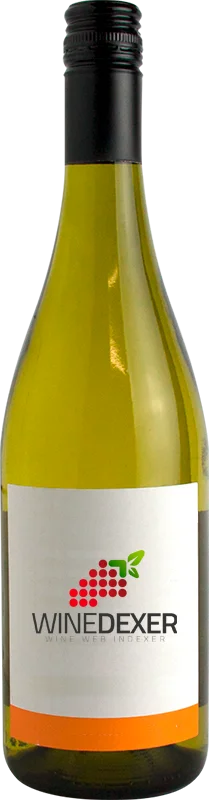
Winery Consorzio I VignaroliBellone
 White wine
In the mouth this white wine is a with a nice freshness.
This wine generally goes well with vegetarian, appetizers and snacks or lean fish.
Taste structure of the Bellone from the Winery Consorzio I Vignaroli
Light | Bold | |
Dry | Sweet | |
Soft | Acidic |
In the mouth the Bellone of Winery Consorzio I Vignaroli in the region of Lazio is a with a nice freshness.
Food and wine pairings with Bellone
Pairings that work perfectly with Bellone



Original food and wine pairings with Bellone


The Bellone of Winery Consorzio I Vignaroli matches generally quite well with dishes of pasta, vegetarian or appetizers and snacks such as recipes of lasagna with courgettes and fresh goat cheese, zucchini quiche or cake with olives and bacon.
Details and technical informations about Winery Consorzio I Vignaroli's Bellone.
Discover the grape variety: Folignan
Folignan blanc is a grape variety that originated in France (Languedoc). It produces a variety of grape specially used for wine making. It is rare to find this grape to eat on our tables. It should be noted that this variety can also be used for the elaboration of eaux de vie. Folignan blanc can be found cultivated in the following vineyards: South-West, Cognac, Bordeaux, Provence & Corsica, Rhone Valley.
Informations about the Winery Consorzio I Vignaroli
The Winery Consorzio I Vignaroli is one of of the world's great estates. It offers 16 wines for sale in the of Lazio to come and discover on site or to buy online.

The wine region of Lazio
Lazio is a region in CentralItaly, where the ancient capital of Rome is located. The region's reputation is based primarily on its white wines, the main varieties of which are Trebbiano, Malvasia di Candia and Malvasia Puntinata. Traditionally, these wines were fat, Round, abboccato and intended for immediate consumption. Today, the styles are lighter, drier and crisper thanks to modern winemaking methods.
The word of the wine: Ban des vendanges
Date of the beginning of the grape harvest, fixed by the lord in the tradition of the Middle Ages and, today, by the prefect.