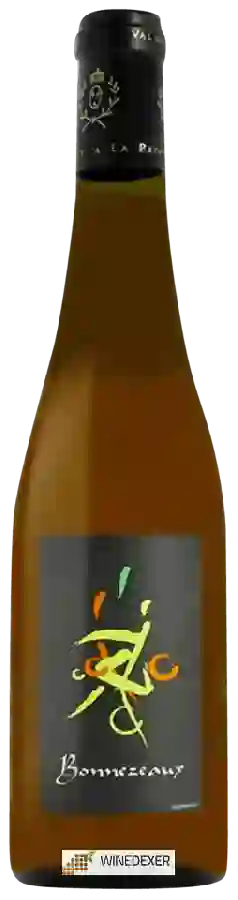
Winery Clement BarautBonnezeaux
 Sweet wine
This wine generally goes well with fruity desserts, lean fish or shellfish.

Food and wine pairings with Bonnezeaux
Pairings that work perfectly with Bonnezeaux



Original food and wine pairings with Bonnezeaux
The Bonnezeaux of Winery Clement Baraut matches generally quite well with dishes of mature and hard cheese, fruity desserts or blue cheese such as recipes of cake with smoked bacon, prunes and comté cheese, express cherry clafoutis or spätzle with roquefort cheese and bacon au gratin.
Details and technical informations about Winery Clement Baraut's Bonnezeaux.
Discover the grape variety: Chenin blanc
Chameleon whites with taut acidity, ranging from mineral dry (Savennières, Vouvray sec) to off-dry and medium-sweet (Vouvray, Montlouis), sumptuous botrytised sweet (Quarts-de-Chaume, Bonnezeaux, Coteaux du Layon) and brilliant sparkling (Crémant de Loire, Vouvray brut). Aromas of quince, apple, honey, white flowers, beeswax and flint. An Anjou variety, also star of South Africa's Western Cape.
Informations about the Winery Clement Baraut
The Winery Clement Baraut is one of of the world's great estates. It offers 14 wines for sale in the of Bonnezeaux to come and discover on site or to buy online.

The wine region of Bonnezeaux
AOC on Anjou's right bank of the Layon (~120 ha, Thouarce, three steep hillsides, marly-schistose soils): exclusive signature Chenin Blanc as sweet white king — golden robe deepening to amber, candied fruits, citrus, honey and white flowers, luscious texture and length. Manual harvests with successive tries, 25 hl/ha, slow fermentation. Morning mists from the Layon favour noble rot and over-ripening. AOC 1951, exceptional ageing.
The wine region of Loire Valley
Kingdom of lively, dry whites and fine sparklers. Mineral, taut Sauvignon Blanc (Sancerre, Pouilly-Fumé) with citrus and gunflint notes. Multiform Chenin Blanc (Vouvray, Savennières, Layon): straight dry, floral off-dry or noble sweet honey-quince. Saline, iodised Muscadet (Melon B.
The word of the wine: Green harvest or green harvesting
The practice of removing excess bunches of grapes from certain vines, usually in July, but sometimes later. This is often necessary, but not always a good thing, as the remaining grapes tend to gain weight.