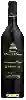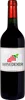
Château La Tour de l'ÉvêqueSainte-Anne Rouge
 Red wine
This wine is a blend of 2 varietals which are the Syrah and the Grenache noir.
In the mouth this red wine is a powerful with a lot of tannins present in the mouth.
This wine generally goes well with beef, game (deer, venison) or lamb.
Taste structure of the Sainte-Anne Rouge from the Château La Tour de l'Évêque
Light | Bold | |
Smooth | Tannic | |
Dry | Sweet | |
Soft | Acidic |
In the mouth the Sainte-Anne Rouge of Château La Tour de l'Évêque in the region of Provence is a powerful with a lot of tannins present in the mouth.
Food and wine pairings with Sainte-Anne Rouge
Pairings that work perfectly with Sainte-Anne Rouge



Original food and wine pairings with Sainte-Anne Rouge

The Sainte-Anne Rouge of Château La Tour de l'Évêque matches generally quite well with dishes of beef, lamb or game (deer, venison) such as recipes of beef in white wine, lamb confit with new potatoes or rabbit and mushroom gibelotte.
Details and technical informations about Château La Tour de l'Évêque's Sainte-Anne Rouge.
Discover the grape variety: Syrah
No one can agree on the origin of Syrah, the black grape variety found today in the Rhône Valley, Provence, Languedoc-Roussillon and southwestern France. Several legends speak of its possible origin in Sicily, Persia or Syria. Tests have finally revealed that it originated in the northern Côtes du Rhône valley. Syrah is a fragile grape variety, which fears drought and is susceptible to disease. Its long shoots are not very resistant to the mistral, which is why they are often tied up or cut short. It needs soil rich in trace elements to feed itself. In these conditions, it produces bunches of beautiful bluish-black grapes with medium-sized berries and sweet, spicy juice. Its red wines are deep in colour, with fruity, spicy and floral aromatic complexity and tannins that structure the whole. With little acidity, they are rather full-bodied and have a high alcohol content. Syrah also makes fruity rosé wines, which are pleasant and have a nice finesse.vinified on its own, Syrah is the only red grape variety of the AOC Cornas and is the majority in the AOC Côte-Rôtie and Hermitage. It is also recommended in the Côtes-du-Vallée du Rhône, Saint-Joseph and Châteauneuf-du-Pape appellations. Finally, the AOCs Palette, Baux-de-Provence, Corbières, Côtes-du-Roussillon, Fronton... also produce it. Today, Syrah is a grape variety that is constantly increasing in surface area throughout the world. It is growing in Italy, Australia, South Africa, Argentina and Mexico.
Informations about the Château La Tour de l'Évêque
The Château La Tour de l'Évêque is one of of the world's great estates. It offers 16 wines for sale in the of Côtes de Provence to come and discover on site or to buy online.

The wine region of Côtes de Provence
The AOC Côtes de Provence is the largest appellation in the Provence wine region of southeastern France. It covers about 20,000 hectares of vineyards, which produce the vast majority of Provence's rosé wine. This appellation includes most of the vineyards in the Var department - essentially the eastern half of the Provence wine region - with the exception of 2,250 hectares North of Toulon which are reserved for the Côteaux Varois en Provence appellation. Although it also covers red and white wine, about 80% of Côtes de Provence production is rosé.
The wine region of Provence
Provence is a wine region in the far southeast of France, best known for the quality (and quantity) of its rosé wines and for its Warm, mild Climate. The modernization that is taking place in many of the traditional wine regions of southern France has not yet taken place to the same extent in Provence, but there are Clear signs of change. The region's Grape varieties, in particular, have come under scrutiny in recent decades. Traditional varieties such as Carignan, Barbaroux (Barbarossa from Sardinia) and Calitor are being replaced by more commercially viable varieties such as Grenache, Syrah and even Cabernet Sauvignon.
The word of the wine: Rootstock
American vine on which a French vine is grafted. This is the consequence of the phylloxera that destroyed the vineyard at the end of the 19th century: after much trial and error, it was discovered that the "pest" spared the roots of the American vines, and the technique became widespread.