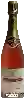
The Winery Charles Ninot of Crémant de Bourgogne of Burgundy

Winery Charles Ninot
The winery offers 4 different wines
3.5


Note - 1Note - 1Note - 1Note - 0.5Note - 0
Its wines get an average rating of 3.5.
This estate is part of the Veuve Ambal.
It is ranked in the top 24 of the estates of Burgundy.
It is located in Crémant de Bourgogne in the region of Burgundy

The Winery Charles Ninot is one of the world's great estates. It offers 4 wines for sale in of Crémant de Bourgogne to come and discover on site or to buy online.
Top Winery Charles Ninot wines

Looking for the best Winery Charles Ninot wines in Crémant de Bourgogne among all the wines in the region? Check out our tops of the best red, white or effervescent Winery Charles Ninot wines. Also find some food and wine pairings that may be suitable with the wines from this area. Learn more about the region and the Winery Charles Ninot wines with technical and enological descriptions.

The top sparkling wines of Winery Charles Ninot

Food and wine pairings with a sparkling wine of Winery Charles Ninot

How Winery Charles Ninot wines pair with each other generally quite well with dishes of shellfish, poultry or appetizers and snacks such as recipes of fish pot, traditional tunisian couscous or hummus.

Organoleptic analysis of sparkling wines of Winery Charles Ninot

On the nose the sparkling wine of Winery Charles Ninot. often reveals types of flavors of cream, apples or green apple and sometimes also flavors of pear, microbio or tree fruit. In the mouth the sparkling wine of Winery Charles Ninot. is a powerful with a nice vivacity and a fine and pleasant bubble.

The best vintages in the sparkling wines of Winery Charles Ninot

  • 2008With an average score of 3.70/5

The grape varieties most used in the sparkling wines of Winery Charles Ninot.

  • Chardonnay
  • Pinot Noir
  • Aligoté

Discovering the wine region of Crémant de Bourgogne

Recognized in 1975, the appellation crémant-de-bourgogne replaced the Sparkling wines whose quality was not very homogeneous. Its geographical area, very vast, covers more than 300 communes, of Châtillonnais, with the borders of Champagne auboise, with Beaujolais included. The AOC imposes conditions of harvest and elaboration as strict as those of the Champagne region and copied on this one, the difference residing in the duration of Maturation on lees, which is of nine months minimum, against twelve for the champagne. The Grape varieties used also bring Crémant-de-Bourgogne closer to its illustrious Champagne model, for although all the varieties of the region can be used, Pinot Noir and Chardonnay are favoured.

The white Crémant-de-Bourgogne can be blanc de blancs (made from chardonnay, blended or not with Aligoté), blanc de noirs (made from pinot noir vinified as white); it can also be a blend of white grapes and pinot noir and/or gamay vinified as white. The rosé is based on pinot noir, sometimes married to gamay. The Finesse of the blanc de blancs, the Power of the blancs de noirs, the delicacy of the rosés, the crémants-de-bourgogne offer varied profiles.

Discover other wineries and winemakers neighboring the Winery Charles Ninot

Planning a wine route in the of Crémant de Bourgogne? Here are the wineries to visit and the winemakers to meet during your trip in search of wines similar to Winery Charles Ninot.

Discover the grape variety: Aligoté

Aligoté is an ancient Burgundian grape variety (it has different names depending on the region in which it is grown: griset blanc in Beaune, giboudot blanc in the Chalonnais or troyen blanc in the Aube), mainly used in the production of Bourgogne-Aligoté, Bouzeron and Crémant-de-Bourgogne.aligoté is a medium-fine white grape variety, quite productive, which gives clear, acidic, fresh and light white wines. An anecdote often says that it was a member of the clergy named Kir who gave it its letters of nobility by adding it to blackcurrant cream to prepare an aperitif.produced on more than 1,600 hectares in Burgundy, aligoté has also been exported. It is also cultivated in Eastern Europe (Ukraine, Romania), California, Canada and Chile, representing more than 20,000 hectares in the world.