The Cave Kouroum of Bekaa Valley
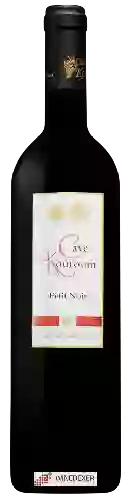
The Cave Kouroum is one of the best wineries to follow in Bekaa Valley.. It offers 23 wines for sale in of Bekaa Valley to come and discover on site or to buy online.
Looking for the best Cave Kouroum wines in Bekaa Valley among all the wines in the region? Check out our tops of the best red, white or effervescent Cave Kouroum wines. Also find some food and wine pairings that may be suitable with the wines from this area. Learn more about the region and the Cave Kouroum wines with technical and enological descriptions.
How Cave Kouroum wines pair with each other generally quite well with dishes of beef, lamb or spicy food such as recipes of lomo saltado, tunisian haja or filet mignon with curry.
On the nose the red wine of Cave Kouroum. often reveals types of flavors of cherry, coffee or plum and sometimes also flavors of leather, dark fruit or non oak.
The Bekaa Valley is the heartland of modern Lebanese wine. Almost 90 percent of Lebanon's wine is made here, as is a respectable proportion of its Arak, the anise-flavored spirit that remains the nation's favorite alcoholic drink.
The original Bekaa Valley Vineyards were planted with Cinsaut, which was subsequently joined by other French vine varieties. Most of these remain in Lebanon’s vinicultural makeup today: red Carignan, Grenache, Syrah, Mourvèdre, Cabernet Sauvignon and Merlot, and white Ugni Blanc, Clairette and Chardonnay.
The oldest winery in the area is Chateau Ksara, which was established by the Jesuit Christians of Taanayel (Tanail), an ancient monastic settlement just down the valley from Ksara. The first Vineyard there was planted in 1857, with plants brought from France via the colonies in Algeria.
At that time Lebanon was ruled by the Ottoman Empire, whose Sharia law condemned the production or consumption of wine except for religious purposes. Thus the initial winery was very subdued, and it was not until the French took control of the country after WW1 (under the League of Nations' French Mandate for Syria and Lebanon) that Bekaa Valley wine production began to expand.
Chateau Musar, founded in 1930, is another Long-established estate in the valley and the most famous in global terms. A 1979 write-up in Decanter magazine by Michael Broadbent helped to Open up export markets. By 1990, the vast majority of their production left the country.
This year marked the end of the Lebanese Civil War, which had lasted since 1975.
How Cave Kouroum wines pair with each other generally quite well with dishes of rich fish (salmon, tuna etc), shellfish or spicy food such as recipes of cream and tuna quiche, rice with shrimps and onions or currywurst.
Originally from Bordeaux, Sauvignon, or Sauvignon Blanc, is reputed to be one of the best French grape varieties for white wine. It is a white grape variety, not to be confused with Sauvignon Gris and its pale yellow color, or with Cabernet Sauvignon which produces red wines. Particularly famous thanks to Sancerre, Sauvignon Blanc is cultivated as far as New Zealand, where it produces great wines whose reputation is well established.
How Cave Kouroum wines pair with each other generally quite well with dishes such as recipes .
Stopper, originally made of wood, used to plug barrels and more generally all wooden containers used to store or mature wine.
How Cave Kouroum wines pair with each other generally quite well with dishes such as recipes .
Planning a wine route in the of Bekaa Valley? Here are the wineries to visit and the winemakers to meet during your trip in search of wines similar to Cave Kouroum.
Mainly cultivated in the Languedoc region, carignan originates from Spain. Because of its very resistant branches, it is often called hardwood. Its bunches are quite large. They are compact and winged with a lignified stalk. The berries are spherical in shape and take on a bluish-black colour. Carignan has a total of 25 approved clones, the best known of which are 274, 65 and 9. The carignan buds at the beginning of June and is protected from spring frosts. It does not reach maturity until the third period. Also, this grape variety needs warmth and sunshine. It appreciates dry and not very fertile soils. Carignan vines can live for more than 100 years. Those that are more than 30 years old produce a better wine. This wine is well coloured. It is generous and powerful at the same time. Pepper, cherry, blackberry, banana, raspberry, almond, prune and violet are some of the aromas that this grape variety gives off.