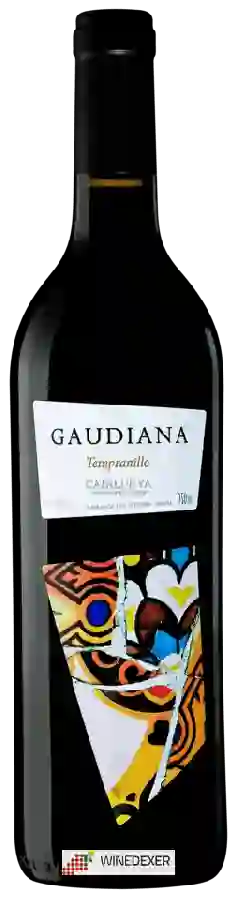
Winery PinordGaudiana Tempranillo
 Red wine


This wine generally goes well with pork, beef or game (deer, venison).

Food and wine pairings with Gaudiana Tempranillo
Pairings that work perfectly with Gaudiana Tempranillo



Original food and wine pairings with Gaudiana Tempranillo


The Gaudiana Tempranillo of Winery Pinord matches generally quite well with dishes of beef, lamb or pork such as recipes of roast beef in a foie gras and chanterelle crust, ramadan berber soup (harira) or beef carrots.
Details and technical informations about Winery Pinord's Gaudiana Tempranillo.
Discover the grape variety: Tempranillo
Elegant, structured reds with aromas of strawberry, cherry, plum, leather, blond tobacco and pronounced vanilla from long oak ageing. Ranges from Joven to Crianza, Reserva and Gran Reserva. Star of Rioja DOCa, Ribera del Duero DO and Toro DO, also shines in the Douro as Tinta Roriz/Aragonez. One of the world's most planted Spanish varieties.
Last vintages of this wine

The best vintages of Gaudiana Tempranillo from Winery Pinord are 2014, 2013, 2010, 2008 and 0.
Informations about the Winery Pinord
The Winery Pinord is one of of the world's great estates. It offers 175 wines for sale in the of Catalogne to come and discover on site or to buy online.

The wine region of Catalogne
Cradle of Cava (~95% of Spanish output, traditional method): Macabeo, Xarel-lo, Parellada trilogy, fine fruity bubble. Quality peak in Priorat DOCa: dense, mineral reds on llicorella (schist), old-vine Garnacha and Cariñena with black fruit, garrigue notes, firm tannins. Also Penedès, fleshy Montsant, sunny Empordà, Costers del Segre. Mediterranean.
The word of the wine: White winemaking
White wines are obtained by fermentation of the juice after pressing. A pre-fermentation maceration is sometimes practiced to extract the aromatic substances from the skins. White wines are normally made from white grapes, but can also be made from red grapes (blanc de noirs). The grapes are then pressed as soon as they arrive at the vat house without maceration in order to prevent the colouring matter contained in the skins from "staining" the wine.


