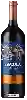
Winery BarahondaOrganic Monastrell - Tintorera
 Red wine



In the mouth this red wine is a powerful.
This wine generally goes well with poultry, beef or veal.

Taste structure of the Organic Monastrell - Tintorera from the Winery Barahonda
Light | Bold | |
Smooth | Tannic | |
Dry | Sweet | |
Soft | Acidic |
In the mouth the Organic Monastrell - Tintorera of Winery Barahonda in the region of Murcie is a powerful.
Wine flavors and olphactive analysis



On the nose the Organic Monastrell - Tintorera of Winery Barahonda in the region of Murcie often reveals types of flavors of non oak, earth or oak and sometimes also flavors of spices, red fruit or black fruit.
Food and wine pairings with Organic Monastrell - Tintorera
Pairings that work perfectly with Organic Monastrell - Tintorera



Original food and wine pairings with Organic Monastrell - Tintorera

The Organic Monastrell - Tintorera of Winery Barahonda matches generally quite well with dishes of beef, pasta or veal such as recipes of fondue with broth, lasagna with pointed cabbage or paupiettes of veal.
Details and technical informations about Winery Barahonda's Organic Monastrell - Tintorera.
Discover the grape variety: Humagne rouge
Structured, wild reds with a sustained ruby robe, firm tannins and fresh alpine acidity, with aromas of red fruit (cherry, raspberry), violet, garrigue, spice, dried herbs and characteristic animal notes. Dense palate, fine ageing potential. Star of the great Valais reds on the sun-drenched slopes of the Swiss Rhône (Sierre, Salquenen, Chamoson). Autochthonous Aosta Valley variety, identical to Cornalin d'Aoste in Italy, with no genetic link to Humagne Blanche.
Last vintages of this wine
The best vintages of Organic Monastrell - Tintorera from Winery Barahonda are 2018, 0, 2019
Informations about the Winery Barahonda
The Winery Barahonda is one of of the world's great estates. It offers 60 wines for sale in the of Yecla to come and discover on site or to buy online.

The wine region of Yecla
DO of Murcia on sunny high plateaus, kingdom of Monastrell (Mourvèdre, ~80% of the vineyard, min. 60% in red). Dense solar signature reds with notes of blackberry, candied black cherry, garrigue, leather, liquorice and a hint of sweet spices, firm tannins and warm palate — historic land of the grape. Round Garnacha, supple Tempranillo, peppery Syrah, firm Cabernet.
The wine region of Murcie
Wine region of southeastern Spain on sunny high plateaus, 3 DOs fanning out: Jumilla, Yecla, Bullas. Monastrell (Mourvedre) reigns in red (~80% of the vineyard): dense and sunny with signature notes of black mulberry, candied black cherry, garrigue, leather, liquorice and a sweet spice touch, firm tannins and a warm palate — pomegranate robe, sustained alcohol, often own-rooted. Round Grenache, supple Tempranillo, peppery Syrah. Southern wines with outstanding value.
The word of the wine: Reduced
This is said of aromas that are reminiscent of a stale wine and that can be released when a long-closed bottle is opened. They generally fade with airing.