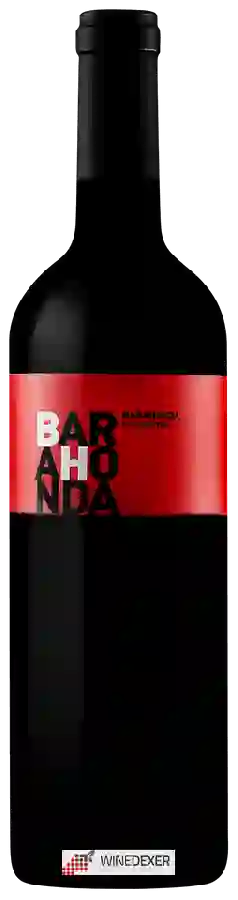
Winery BarahondaMonastrell
 Red wine


In the mouth this red wine is a powerful with a nice balance between acidity and tannins.
This wine generally goes well with beef, game (deer, venison) or lamb.
The Monastrell of the Winery Barahonda is in the top 60 of wines of Yecla.

Taste structure of the Monastrell from the Winery Barahonda
Light | Bold | |
Smooth | Tannic | |
Dry | Sweet | |
Soft | Acidic |
In the mouth the Monastrell of Winery Barahonda in the region of Murcie is a powerful with a nice balance between acidity and tannins.
Wine flavors and olphactive analysis




On the nose the Monastrell of Winery Barahonda in the region of Murcie often reveals types of flavors of non oak, earth or microbio and sometimes also flavors of oak, spices or red fruit.
Food and wine pairings with Monastrell
Pairings that work perfectly with Monastrell



Original food and wine pairings with Monastrell

The Monastrell of Winery Barahonda matches generally quite well with dishes of beef, pasta or lamb such as recipes of beef with balsamic sauce, pasta with tuna or mouse of lamb with honey and thyme.
Details and technical informations about Winery Barahonda's Monastrell.
Discover the grape variety: Xarello
Structured, aromatic whites with full body and firm acidity, with aromas of white flowers, yellow fruits, fennel, fresh almond, Mediterranean herbs and mineral notes. Central component of Cava DO (with macabeo and parellada), bringing structure and ageing potential to Catalan sparkling wines. Also as ambitious still whites in Penedès DO and Classic Penedès. Native Catalan variety.
Last vintages of this wine

The best vintages of Monastrell from Winery Barahonda are 2017, 2016, 2014, 2018 and 2013.
Informations about the Winery Barahonda
The Winery Barahonda is one of of the world's great estates. It offers 60 wines for sale in the of Yecla to come and discover on site or to buy online.

The wine region of Yecla
DO of Murcia on sunny high plateaus, kingdom of Monastrell (Mourvèdre, ~80% of the vineyard, min. 60% in red). Dense solar signature reds with notes of blackberry, candied black cherry, garrigue, leather, liquorice and a hint of sweet spices, firm tannins and warm palate — historic land of the grape. Round Garnacha, supple Tempranillo, peppery Syrah, firm Cabernet.
The wine region of Murcie
Wine region of southeastern Spain on sunny high plateaus, 3 DOs fanning out: Jumilla, Yecla, Bullas. Monastrell (Mourvedre) reigns in red (~80% of the vineyard): dense and sunny with signature notes of black mulberry, candied black cherry, garrigue, leather, liquorice and a sweet spice touch, firm tannins and a warm palate — pomegranate robe, sustained alcohol, often own-rooted. Round Grenache, supple Tempranillo, peppery Syrah. Southern wines with outstanding value.
The word of the wine: Eye
In tasting, this is the first phase of the analysis of the wine, which consists of describing its visual aspect (colour, intensity, clarity, brilliance and possible defects).


