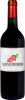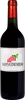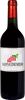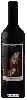
Winery BlakemoreRed Cuvée
 Red wine
In the mouth this red wine is a powerful with a nice balance between acidity and tannins.
This wine generally goes well with poultry, beef or veal.
Taste structure of the Red Cuvée from the Winery Blakemore
Light | Bold | |
Smooth | Tannic | |
Dry | Sweet | |
Soft | Acidic |
In the mouth the Red Cuvée of Winery Blakemore in the region of California is a powerful with a nice balance between acidity and tannins.
Food and wine pairings with Red Cuvée
Pairings that work perfectly with Red Cuvée



Original food and wine pairings with Red Cuvée

The Red Cuvée of Winery Blakemore matches generally quite well with dishes of beef, lamb or veal such as recipes of monkfish with vegetable tagliatelle, couscous without couscous maker or duck breast with red fruits.
Details and technical informations about Winery Blakemore's Red Cuvée.
Discover the grape variety: Herbemont
The origin of this American interspecific hybrid of the southern Vitis Aestivalis group, also called Vitis Bourquiniana, is not known for certain. In South Carolina (United States), it was propagated in the early 1800s by a Frenchman, Nicholas Herbemont (1771-1839), who found his first origins in Champagne. In France, it is one of six hybrids prohibited since 1935 (included in European regulations): Clinton, Herbemont, Isabelle, Jacquez, Noah and Othello. The Herbemont is very similar to the Jacquez - also called black spanish or lenoir - and has practically disappeared in favour of the latter.
Informations about the Winery Blakemore
The Winery Blakemore is one of of the world's greatest estates. It offers 7 wines for sale in the of California to come and discover on site or to buy online.

The wine region of California
California is the largest and most important wine region in the United States. It represents the southern two-thirds (850 miles or 1,370 kilometers) of the country's west coast. (Oregon and Washington make up the rest. ) The state also spans nearly 10 degrees of latitude.
The word of the wine: White winemaking
White wines are obtained by fermentation of the juice after pressing. A pre-fermentation maceration is sometimes practiced to extract the aromatic substances from the skins. White wines are normally made from white grapes, but can also be made from red grapes (blanc de noirs). The grapes are then pressed as soon as they arrive at the vat house without maceration in order to prevent the colouring matter contained in the skins from "staining" the wine.