The Winery Bastide Saint Jean of Côtes de Provence of Provence
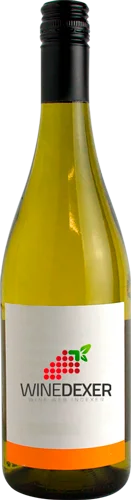
Winery Bastide Saint Jean
The winery offers 2 different wines
4.1


Note - 1Note - 1Note - 1Note - 1Note - 0
Its wines get an average rating of 4.1.
It is ranked in the top 684 of the estates of Provence.
It is located in Côtes de Provence in the region of Provence

The Winery Bastide Saint Jean is one of the best wineries to follow in Côtes de Provence.. It offers 2 wines for sale in of Côtes de Provence to come and discover on site or to buy online.
Top Winery Bastide Saint Jean wines

Looking for the best Winery Bastide Saint Jean wines in Côtes de Provence among all the wines in the region? Check out our tops of the best red, white or effervescent Winery Bastide Saint Jean wines. Also find some food and wine pairings that may be suitable with the wines from this area. Learn more about the region and the Winery Bastide Saint Jean wines with technical and enological descriptions.

The top white wines of Winery Bastide Saint Jean

Food and wine pairings with a white wine of Winery Bastide Saint Jean

How Winery Bastide Saint Jean wines pair with each other generally quite well with dishes of pork, rich fish (salmon, tuna etc) or vegetarian such as recipes of turkey roulades, flavoured sauce, salmon cannelloni or mushroom, bacon and gruyere quiche.

The best vintages in the white wines of Winery Bastide Saint Jean

  • 2018With an average score of 4.10/5
  • 0With an average score of 4.10/5

The grape varieties most used in the white wines of Winery Bastide Saint Jean.

  • Chardonnay

Discovering the wine region of Côtes de Provence

The AOC Côtes de Provence is the largest appellation in the Provence wine region of southeastern France. It covers about 20,000 hectares of vineyards, which produce the vast majority of Provence's rosé wine. This appellation includes most of the vineyards in the Var department - essentially the eastern half of the Provence wine region - with the exception of 2,250 hectares North of Toulon which are reserved for the Côteaux Varois en Provence appellation. Although it also covers red and white wine, about 80% of Côtes de Provence production is rosé.

This wine is mainly made from the Grenache, Syrah, Mourvèdre and Cinsaut grapes, as well as the quintessential Provence red Tibouren. Although clearly a minority, the Volume of red wine produced under this title (and elsewhere in Provence) is increasing and currently represents about 15% of the total. Grapes such as the three key Rhone varieties mentioned above and Cabernet Sauvignon (introduced here in the 1960s) are being used by a New wave of winemakers eager to demonstrate that rosé is not the only interesting wine in the region. Only about five percent of Côtes de Provence wines are made from white grapes, particularly Rolle (Vermentino).

The top pink wines of Winery Bastide Saint Jean

Food and wine pairings with a pink wine of Winery Bastide Saint Jean

How Winery Bastide Saint Jean wines pair with each other generally quite well with dishes of pork, shellfish or vegetarian such as recipes of beef bourguignon with cookéo, yellow risotto with mussels or zucchini quiche.

Discover the grape variety: Frontenac

A cross between Landot 4511 and Vitis Riparia 89 (very resistant to cold) obtained in 1978 at the University of Minnesota (United States) and propagated from 1996. It can also be found in Canada (Quebec, Ontario, etc.), in Lithuania, etc. In France, it is practically unknown. Note that the white and grey Frontenac are derived from mutations of the black, encountered and isolated in 2003 for the grey and in September 2005 for the white. - Synonymy: MN 1047 (for all the grape variety synonyms, click here!).

Discover other wineries and winemakers neighboring the Winery Bastide Saint Jean

Planning a wine route in the of Côtes de Provence? Here are the wineries to visit and the winemakers to meet during your trip in search of wines similar to Winery Bastide Saint Jean.

Discover the grape variety: Muscat à petits grains

Muscat à petits grains is a white grape variety of Greek origin. Present in several Mediterranean vineyards, it has several synonyms such as muscat de Die, muscat blanc and frontignac. In France, it occupies a little less than 7,000 ha out of a total of 45,000 ha worldwide. Its young shoots are downy. Its youngest leaves are shiny, bronzed and scabrous. The berries and bunches of this variety are all medium-sized. The flesh of the berries is juicy, sweet and firm. Muscat à petits grains has a second ripening period and buds early in the year. It is moderately vigorous and must be pruned short. It likes poor, stony slopes. This variety is often exposed to spring frosts. It fears mildew, wasps, grape worms, court-noué, grey rot and powdery mildew. Muscat à petits grains is used to make rosé wines and dry white wines. Orange, brown sugar, barley sugar and raisins are the known aromas of these wines.