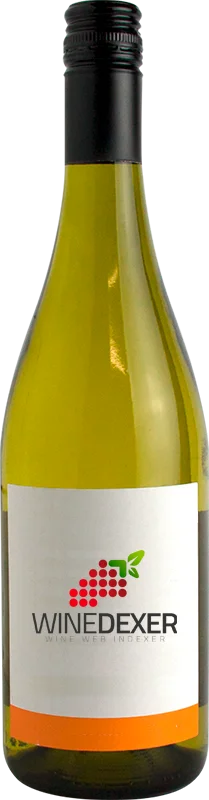
Winery Azienda Agricola CalongaAlbana
 White wine



In the mouth this white wine is a powerful.
This wine generally goes well with lean fish, shellfish or mature and hard cheese.
Taste structure of the Albana from the Winery Azienda Agricola Calonga
Light | Bold | |
Dry | Sweet | |
Soft | Acidic |
In the mouth the Albana of Winery Azienda Agricola Calonga in the region of Emilia-Romagna is a powerful.
Food and wine pairings with Albana
Pairings that work perfectly with Albana



Original food and wine pairings with Albana


The Albana of Winery Azienda Agricola Calonga matches generally quite well with dishes of pasta, shellfish or mature and hard cheese such as recipes of soy and shrimp noodles, lamb with okra sauce or beetroot and potato gratin.
Details and technical informations about Winery Azienda Agricola Calonga's Albana.
Discover the grape variety: Monerac
Monerac noir is a grape variety that originated in France (Languedoc). It produces a variety of grape specially used for wine making. It is rare to find this grape to eat on our tables. Monerac noir can be found in several vineyards: South-West, Cognac, Bordeaux, Provence & Corsica, Rhone valley, Languedoc & Roussillon, Loire valley, Savoie & Bugey, Beaujolais.
Last vintages of this wine
The best vintages of Albana from Winery Azienda Agricola Calonga are 0
Informations about the Winery Azienda Agricola Calonga
The Winery Azienda Agricola Calonga is one of of the world's greatest estates. It offers 13 wines for sale in the of Emilia-Romagna to come and discover on site or to buy online.

The wine region of Emilia-Romagna
Romagna/emilia">Emilia-Romagna is a Rich and fertile region in Northern Italy, and one of the country's most prolific wine-producing regions, with over 58,000 hectares (143,320 acres) of vines in 2010. It is 240 kilometers (150 miles) wide and stretches across almost the entire northern Italian peninsula, sandwiched between Tuscany to the South, Lombardy and Veneto to the north and the Adriatic Sea to the east. Nine miles of Liguria is all that separates Emilia-Romagna from the Ligurian Sea, and its uniqueness as the only Italian region with both an east and west coast. Emilia-Romagna's wine-growing heritage dates back to the seventh century BC, making it one of the oldest wine-growing regions in Italy.
The word of the wine: Chaptalization
The addition of sugar at the time of fermentation of the must, an ancient practice, but theorized by Jean-Antoine Chaptal at the dawn of the 19th century. The sugar is transformed into alcohol and allows the natural degree of the wine to be raised in a weak or cold year, or - more questionably - when the winegrower has a harvest that is too large to obtain good maturity.