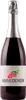
Winery Amedeo CastelluccioPollinéa Rosso
 Red wine



In the mouth this red wine is a .
This wine generally goes well with poultry, beef or veal.
Taste structure of the Pollinéa Rosso from the Winery Amedeo Castelluccio
Light | Bold | |
Smooth | Tannic | |
Dry | Sweet | |
Soft | Acidic |
In the mouth the Pollinéa Rosso of Winery Amedeo Castelluccio in the region of Emilia-Romagna is a .
Food and wine pairings with Pollinéa Rosso
Pairings that work perfectly with Pollinéa Rosso



Original food and wine pairings with Pollinéa Rosso

The Pollinéa Rosso of Winery Amedeo Castelluccio matches generally quite well with dishes of beef, pasta or veal such as recipes of improved horse steak, lasagna bolognese express or stuffed cutlets.
Details and technical informations about Winery Amedeo Castelluccio's Pollinéa Rosso.
Discover the grape variety: Monbadon
Originally from the Charentes region, it is now endangered. It is still found in isolated stocks, most often in old ugni blanc plantations. This variety is said to be the result of a natural cross between folle blanche and ugni blanc. It is registered in the Official Catalogue of Vine Varieties, list A1. - Synonyms: frontignan des Charentes, aramon blanc by mistake in the Var, gros montils on the island of Oléron, ugni de Montpellier, burger (not to be confused with elbling and gouais blanc which have the same synonym), auba, meslier d'Orléans (not to be confused with meslier saint François) (for all the synonyms of the grape varieties, click here!)
Last vintages of this wine
The best vintages of Pollinéa Rosso from Winery Amedeo Castelluccio are 0
Informations about the Winery Amedeo Castelluccio
The Winery Amedeo Castelluccio is one of of the world's greatest estates. It offers 6 wines for sale in the of Emilia-Romagna to come and discover on site or to buy online.

The wine region of Emilia-Romagna
Romagna/emilia">Emilia-Romagna is a Rich and fertile region in Northern Italy, and one of the country's most prolific wine-producing regions, with over 58,000 hectares (143,320 acres) of vines in 2010. It is 240 kilometers (150 miles) wide and stretches across almost the entire northern Italian peninsula, sandwiched between Tuscany to the South, Lombardy and Veneto to the north and the Adriatic Sea to the east. Nine miles of Liguria is all that separates Emilia-Romagna from the Ligurian Sea, and its uniqueness as the only Italian region with both an east and west coast. Emilia-Romagna's wine-growing heritage dates back to the seventh century BC, making it one of the oldest wine-growing regions in Italy.
The word of the wine: Oenologist
Specialist in wine-making techniques. It is a profession and not a passion: one can be an oenophile without being an oenologist (and the opposite too!). Formerly attached to the Faculty of Pharmacy, oenology studies have become independent and have their own university course. Learning to make wine requires a good chemical background but also, increasingly, a good knowledge of the plant. Some oenologists work in laboratories (analysis). Others, the consulting oenologists, work directly in the properties.