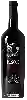
Winery Alberto LoiLoi Corona
 Red wine



In the mouth this red wine is a powerful with a lot of tannins present in the mouth.
This wine generally goes well with beef, lamb or pasta.
Taste structure of the Loi Corona from the Winery Alberto Loi
Light | Bold | |
Smooth | Tannic | |
Dry | Sweet | |
Soft | Acidic |
In the mouth the Loi Corona of Winery Alberto Loi in the region of Sardinia is a powerful with a lot of tannins present in the mouth.
Food and wine pairings with Loi Corona
Pairings that work perfectly with Loi Corona



Original food and wine pairings with Loi Corona
The Loi Corona of Winery Alberto Loi matches generally quite well with dishes of beef, pasta or lamb such as recipes of baeckeoffe, pasta carbonara or sri lankan lamb rolls (mutton rolls).
Details and technical informations about Winery Alberto Loi's Loi Corona.
Discover the grape variety: Meslier Saint-François
Meslier Saint François is a French grape variety that comes from the Gatinais, located south of the Paris basin. It was obtained from a cross between Chenin and Gouais Blanc. It is planted on a surface area of 50 ha in France and is often confused with Arbois, hence the synonym it shares with the latter, Orbois. Its berries and clusters are of normal size. Its adult leaves have convex teeth. Meslier Saint François is not very vigorous, but it remains fertile. It buds early, 3 days before Chasselas. It is often exposed to spring frosts and is susceptible to oidium and grey rot. Meslier Saint François produces flat, light wines with little alcohol. When distilled, its eaux de vie are full of bouquet and fine. It can thus be used in the blending of grape varieties that produce cognac or armagnac.
Last vintages of this wine
The best vintages of Loi Corona from Winery Alberto Loi are 0, 2009
Informations about the Winery Alberto Loi
The Winery Alberto Loi is one of of the world's greatest estates. It offers 13 wines for sale in the of Sardinia to come and discover on site or to buy online.

The wine region of Sardinia
Sardinia, located 240 km off the west coast of mainland Italy, is the second largest island in the Mediterranean. With an area of about 9,300 square miles, it is almost three times the Size of Corsica, its immediate neighbor to the North, and only slightly smaller than the other major Italian island, Sicily. The island, called Sardegna by its Italian-speaking inhabitants, has belonged to various empires and kingdoms over the centuries. This is reflected in its place names, architecture, languages and dialects, and its unique portfolio of wine grapes.
The word of the wine: Sweet (flavor)
The flavour provided by the residual sugars naturally present in the wine as well as by certain alcohols. This sensation can range from a simple impression of smoothness to a clear sweetness. We speak of roundness, fatness and mellowness.