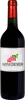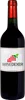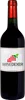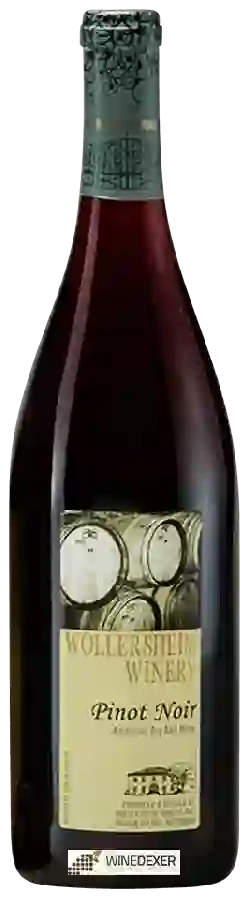
Wollersheim WineryPinot Noir
 Red wine



This wine generally goes well with pork, poultry or veal.
The Pinot Noir of the Wollersheim Winery is in the top 40 of wines of Wisconsin.

Wine flavors and olphactive analysis



On the nose the Pinot Noir of Wollersheim Winery in the region of Wisconsin often reveals types of flavors of non oak, earth or oak and sometimes also flavors of spices, red fruit or black fruit.
Food and wine pairings with Pinot Noir
Pairings that work perfectly with Pinot Noir



Original food and wine pairings with Pinot Noir


The Pinot Noir of Wollersheim Winery matches generally quite well with dishes of veal, pork or game (deer, venison) such as recipes of potjevleesch (meat in a pot), broccoli gratin or duck legs confit.
Details and technical informations about Wollersheim Winery's Pinot Noir.
Discover the grape variety: Pinot noir
Elegant reds, light in colour with silky tannins, showing strawberry, cherry and raspberry aromas, evolving to forest floor, mushroom and spice with age. Fresh acidity, delicate finish. Star of the Côte d'Or (Romanée-Conti, Chambertin, Volnay), pillar of Champagne (Blanc de Noirs) and signature of Oregon, Central Otago and Sonoma Coast. An early-ripening Burgundian variety, one of the world's greatest.
Last vintages of this wine
The best vintages of Pinot Noir from Wollersheim Winery are 2010, 2016, 2012, 0 and 2015.
Informations about the Wollersheim Winery
The Wollersheim Winery is one of of the world's great estates. It offers 26 wines for sale in the of Wisconsin to come and discover on site or to buy online.

The wine region of Wisconsin
Wine state of the northern American Midwest, harsh continental climate requiring cold-hardy hybrids. Signature Marquette in red: deep robe with signature notes of black cherry, plum, black pepper, cocoa and a herbaceous touch, firm tannins and lively acidity — bred for these extreme climates. Also spicy Maréchal Foch, Léon Millot. Aromatic whites: muscaty La Crescent (apricot, honey), fruity Brianna, vivid La Crosse, Saint Pepin.
The word of the wine: Passerillage
Concentration of the grape by drying out, under the influence of wind or sun, as opposed to botrytisation, which is the concentration obtained by the development of the "noble rot" for which Botrytis cinerea is responsible. The word is mainly used for sweet wines.