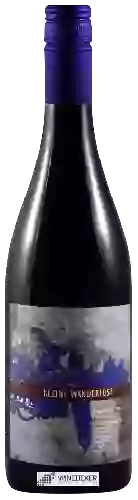
The Winery 2Naturkinder of Franken

The Winery 2Naturkinder is one of the world's great estates. It offers 20 wines for sale in of Franken to come and discover on site or to buy online.
Looking for the best Winery 2Naturkinder wines in Franken among all the wines in the region? Check out our tops of the best red, white or effervescent Winery 2Naturkinder wines. Also find some food and wine pairings that may be suitable with the wines from this area. Learn more about the region and the Winery 2Naturkinder wines with technical and enological descriptions.
How Winery 2Naturkinder wines pair with each other generally quite well with dishes of beef, veal or game (deer, venison) such as recipes of tournedos rossini, veal cutlets parmigiana or canned duck confit.
On the nose the red wine of Winery 2Naturkinder. often reveals types of flavors of smoke, plum or non oak and sometimes also flavors of earth, oak or tree fruit. In the mouth the red wine of Winery 2Naturkinder. is a with a nice freshness.
Franken, or Franconia in English, is a wine-growing region in the northwest of Germany's historic state of Bavaria. Though Bavaria may be more famous for its beer, Franken boasts a proud viticultural tradition and is one of the most unique regions in the country.
There are just over 6,100 hectares (15,073 ac) of vines Planted in Franken and around 80 percent of these are white Grape varieties. Here, Riesling plays second fiddle to the often overlooked Silvaner and Müller-Thurgau.
Indeed, Silvaner lays claim as Franken's leading grape variety and is one of the only places in the world where it outperforms Riesling.
This area is also home to the distinctive Bocksbeutal, an ellipsoidal bottle that is protected by the European Union. More than 40 percent of all Franken wines are bottled in the Bocksbeutel, which is often described as flagon-like in appearance. Only Franken and nearby villages in northern Baden are allowed to use the Bocksbeutal, with selected areas in Portugal, Italy and Greece permitted to employ their own variations.
The Main river cuts a weaving path through the best wine-producing villages, with south-facing Vineyards lining its banks. The many tributaries to the Main are also influential and help mitigate the cold winter temperatures brought about by the continental Climate. The river defines the region's three Bereichs, which are named after various geographical indicators: Mainviereck (Main square), Maindreieck (Main triangle) and Steigerwald (Steiger forest).
Franken has a wine-making history that dates back at least 1,200 years, with evidence that Emperor Charlemagne approved a document describing the borders between the towns of Randersacker and Würzburg in 779.
How Winery 2Naturkinder wines pair with each other generally quite well with dishes of shellfish, spicy food or vegetarian such as recipes of scallops with saffron, homemade pork curry or light tuna-tomato quiche (without cream).
On the nose the white wine of Winery 2Naturkinder. often reveals types of flavors of citrus, apples or peach and sometimes also flavors of green apple, apricot or pear. In the mouth the white wine of Winery 2Naturkinder. is a with a nice freshness.
How Winery 2Naturkinder wines pair with each other generally quite well with dishes of shellfish, spicy food or poultry such as recipes of chicken and shrimp jambalaya, coral lentil dahl or old-fashioned turkey fillets.
On the nose the sparkling wine of Winery 2Naturkinder. often reveals types of flavors of earth, microbio or tree fruit and sometimes also flavors of spices, citrus fruit or tropical fruit.
A more or less lasting impression that is felt in the mouth once the wine has been swallowed (or spat out in the case of a professional tasting). The finish can be short or persistent.
Planning a wine route in the of Franken? Here are the wineries to visit and the winemakers to meet during your trip in search of wines similar to Winery 2Naturkinder.
Müller-Thurgau shows the character of its noble origins. This Swiss white grape variety is a cross between the royal madeleine and the riesling. The idea that the latter was crossed with the sylvaner is irrelevant. The variety can be recognized by its vigorous character and its semi-erect habit. Preferring rich soils and short prunings, the plant sees its buds open quite early. The buds are cottony and soft green in color. The slightly embossed and tormented blade, with 5 to 7 lobes, makes it possible to distinguish the adult leaves. The clusters appear compact, pyramidal or cylindrical in shape and small to medium in size. The flavour of the Müller-Turgau berries is reminiscent of Muscat. The juicy and crunchy pulp is revealed under a greyish skin. When ripe, the fruit has a mottled shell on a golden yellow background. Switzerland prefers to extract the juice from this variety. The wine made from it is rather heavy and does not keep well.