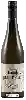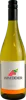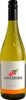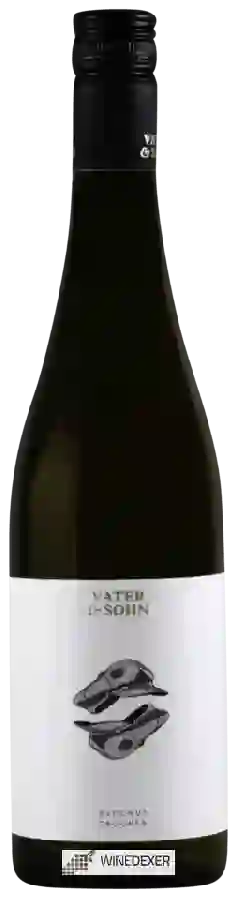
Winery 2NaturkinderVater & Sohn Bacchus Trocken
 White wine



This wine generally goes well with
Wine flavors and olphactive analysis



On the nose the Vater & Sohn Bacchus Trocken of Winery 2Naturkinder in the region of Rheinhessen often reveals types of flavors of earth, tree fruit or citrus fruit and sometimes also flavors of floral, tropical fruit.
Details and technical informations about Winery 2Naturkinder's Vater & Sohn Bacchus Trocken.
Discover the grape variety: Canner seedless
Cross between hunisa and sultana obtained in 1931 in the United States by Professor Harold P. Olmo of the University of Davis (California). In France, this variety is almost unknown, but it is listed in the official catalogue of vine varieties intended for canning.
Last vintages of this wine
The best vintages of Vater & Sohn Bacchus Trocken from Winery 2Naturkinder are 2018, 0, 2017
Informations about the Winery 2Naturkinder
The Winery 2Naturkinder is one of of the world's great estates. It offers 20 wines for sale in the of Rheinhessen to come and discover on site or to buy online.

The wine region of Rheinhessen
Rheinhessen is Germany's largest region for producing the quality wines of the Qualitätswein bestimmter Anbaugebiete (QbA) and Prädikatswein designations, with roughly 26,500 hectares (65,000 acres) of Vineyard">Vineyards as of 2014. Many of its most significant viticultural areas are favorably influenced by the Rhine river, which runs aLong its North and eastern borders. The Rhine, along with the Nahe river to the west and the Haardt mountains to its South, form a natural border. Rheinhessen covers an area south of Rheingau, north of Pfalz and east of Nahe, and is located within the Rhineland-Palatinate federal state.
The word of the wine: Silky
Said of a caressing wine with extremely fine tannins.