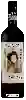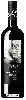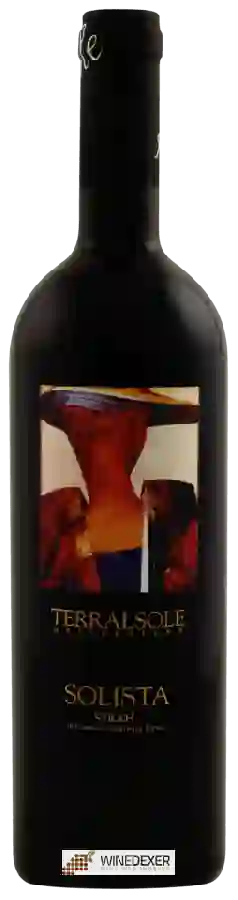
Winery TerralsoleSolista Syrah
 Red wine


In the mouth this red wine is a powerful with a lot of tannins present in the mouth.
This wine generally goes well with poultry, beef or veal.

Taste structure of the Solista Syrah from the Winery Terralsole
Light | Bold | |
Smooth | Tannic | |
Dry | Sweet | |
Soft | Acidic |
In the mouth the Solista Syrah of Winery Terralsole in the region of Tuscany is a powerful with a lot of tannins present in the mouth.
Wine flavors and olphactive analysis




On the nose the Solista Syrah of Winery Terralsole in the region of Tuscany often reveals types of flavors of non oak, earth or microbio and sometimes also flavors of oak, spices or red fruit.
Food and wine pairings with Solista Syrah
Pairings that work perfectly with Solista Syrah



Original food and wine pairings with Solista Syrah


The Solista Syrah of Winery Terralsole matches generally quite well with dishes of beef, lamb or veal such as recipes of beef mironton, pastasotto pepper merguez (risotto style pasta) or vital tone / vitello tonnato (italy).
Details and technical informations about Winery Terralsole's Solista Syrah.
Discover the grape variety: Camaralet de Lasseube
Aromatic, structured dry whites with a pale golden robe, an ample palate and preserved acidity, showing rare signature spicy aromas (fennel, pepper, cinnamon, anise), white flowers and yellow fruits. A unique profile with a very strong personality. Very rare (less than 1 ha cultivated), preserved by a few Béarnais winegrowers and blended with Lauzet and Gros Manseng in heritage cuvées. An indigenous French variety from the Béarn (Pyrénées-Atlantiques).
Last vintages of this wine

The best vintages of Solista Syrah from Winery Terralsole are 2007, 2006, 0, 2005
Informations about the Winery Terralsole
The Winery Terralsole is one of of the world's greatest estates. It offers 17 wines for sale in the of Tuscany to come and discover on site or to buy online.

The wine region of Tuscany
Kingdom of Sangiovese: upright reds with cherry, plum, dried herbs and leather, lively acidity and firm tannins. Fleshy, food-friendly Chianti Classico DOCG, deep long-ageing Brunello di Montalcino (spice, tobacco, ripe black fruit), elegant Vino Nobile di Montepulciano. On the coast, Bolgheri crafts the opulent Cabernet- and Merlot-based 'Super Tuscans'. Some fresh white Vernaccia.
The word of the wine: Methuselah
Bottle with a capacity of 6 litres (synonymous with imperial).