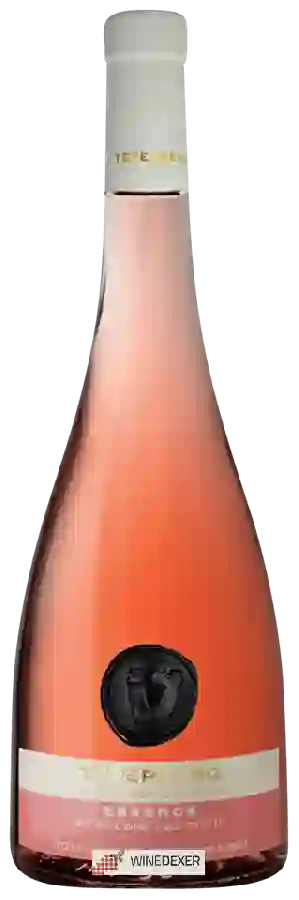
Winery TeperbergEssence Rosé
 Pink wine



This wine generally goes well with pork, poultry or beef.
Wine flavors and olphactive analysis

On the nose the Essence Rosé of Winery Teperberg in the region of Judean Hills often reveals types of flavors of citrus fruit, red fruit.
Food and wine pairings with Essence Rosé
Pairings that work perfectly with Essence Rosé



Original food and wine pairings with Essence Rosé



The Essence Rosé of Winery Teperberg matches generally quite well with dishes of beef, pork or spicy food such as recipes of braciola (southern italy), cajun jumbalaya rice or couscous from the sea.
Details and technical informations about Winery Teperberg's Essence Rosé.
Discover the grape variety: Verdanel
The Verdanel grape variety is particularly cultivated in the southwestern region of Gaillac, in the Tarn department. This very old white grape variety does not fear either the cold or the heat. Today, it is very rare and almost extinct. The Verdanel is not classified in the Appellations of Controlled Origin. The Verdanel has serrated leaves, almost whole and of a tender green colour. Its conical bunches are filled with medium-sized, slightly ellipsoid fruits. When the berries reach maturity, their greenish-white color turns to golden white. A dry white wine with a low alcohol content is produced from this variety. It also has a low acidity level. This wine goes well with spicy dishes as well as lobster or red mullet.
Last vintages of this wine
The best vintages of Essence Rosé from Winery Teperberg are 0, 2018
Informations about the Winery Teperberg
The Winery Teperberg is one of of the world's great estates. It offers 85 wines for sale in the of Judean Hills to come and discover on site or to buy online.

The wine region of Judean Hills
Judean Hills wine region – which is theoretically further divided into the Jerusalem, Gush Etzion and Southern Judean Hills sub-regions – Lies within the Samson region of Central Israel. The Judean Hills (or Mountains) form a low mountain range that dominates the landscape around Jerusalem and the West Bank. Hebron, Bethlehem and Ramallah also lie within the range, which formed the core territory of the Kingdom of Judah where the earliest Jewish settlements were located. Although not one of Israel's better known wine regions (like Upper Galilee and the Golan Heights in Galilee), Judean Hills is an emerging viticultural area, and significant potential has been identified for its future.
The word of the wine: Flow
Action consisting of draining the wine from a vat of red wine (free-run wine), the marc then being pressed to obtain the press wine.