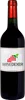
Staatsweingut WeinsbergSpätburgunder
 Red wine
In the mouth this red wine is a with a nice freshness.
This wine generally goes well with poultry, beef or veal.
Taste structure of the Spätburgunder from the Staatsweingut Weinsberg
Light | Bold | |
Smooth | Tannic | |
Dry | Sweet | |
Soft | Acidic |
In the mouth the Spätburgunder of Staatsweingut Weinsberg in the region of Württemberg is a with a nice freshness.
Food and wine pairings with Spätburgunder
Pairings that work perfectly with Spätburgunder



Original food and wine pairings with Spätburgunder

The Spätburgunder of Staatsweingut Weinsberg matches generally quite well with dishes of beef, veal or game (deer, venison) such as recipes of beef fillet in a crust, blanquette of veal in pickle sauce or pheasant in a casserole with white wine.
Details and technical informations about Staatsweingut Weinsberg's Spätburgunder.
Discover the grape variety: Nero
An interspecific cross between Merlot Noir or Medoc Noir x Perle de Csaba and Villard Blanc x Gardonyi Geza, obtained in Hungary in 1965 by Josef Csizmazia. It can be found in the Netherlands, Belgium, Switzerland, Germany, Hungary, Poland, etc. In France, it is practically unknown. It should not be confused with two Italian grape varieties, the nero d'Avola and the nero di troia or uva di troia. Note that it is an ideal variety for amateur gardeners for the simple fact that it does not fear the main cryptogamic diseases such as mildew and oidium, to have an early maturity and moreover its grape is very tasty.
Informations about the Staatsweingut Weinsberg
The Staatsweingut Weinsberg is one of of the world's great estates. It offers 68 wines for sale in the of Württemberg to come and discover on site or to buy online.

The wine region of Württemberg
Württemberg is known as Germany's premier red wine region. With almost 11,500 hectares (28,500 acres) of vineyards, it is the fourth-largest wine region in the country. Found adjacent to Baden and South of Franken, Wüttemberg is a particularly hilly and rural wine-region. Almost 70-percent of Württemberg wines are red, predominantly made from Trollinger, SchwarzRiesling and Lemberger.
The word of the wine: Thermoregulation
Control of the vinification temperatures (by circulating hot or cold water on the walls of the vats, for example). This is a major step forward, which in particular helps to preserve the freshness of the aromas threatened by excessive temperature rises during fermentation.