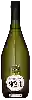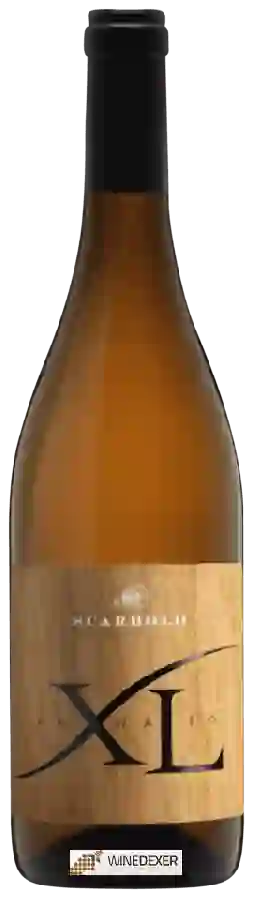
Winery ScarboloXL
 White wine



In the mouth this white wine is a .
This wine generally goes well with vegetarian, shellfish or mushrooms.
Taste structure of the XL from the Winery Scarbolo
Light | Bold | |
Dry | Sweet | |
Soft | Acidic |
In the mouth the XL of Winery Scarbolo in the region of Friuli-Venezia Giulia is a .
Wine flavors and olphactive analysis





On the nose the XL of Winery Scarbolo in the region of Friuli-Venezia Giulia often reveals types of flavors of non oak, earth or microbio and sometimes also flavors of vegetal, oak or tree fruit.
Food and wine pairings with XL
Pairings that work perfectly with XL


Original food and wine pairings with XL

The XL of Winery Scarbolo matches generally quite well with dishes of shellfish, vegetarian or mushrooms such as recipes of fish and seafood gratin, nanie's diced ham quiche or pizza calzone with ham and mushrooms.
Details and technical informations about Winery Scarbolo's XL.
Discover the grape variety: Pinella blanca
A very old grape variety that has been cultivated for a very long time in Italy - where it originated - and that can still be found today in the Veneto region. It is also known in Slovenia and Bulgaria, but is virtually unknown in France. According to genetic analysis, it is related to the white gouais, which it resembles somewhat. There is a Pinella nera, but it is not clear whether it is the black form.
Last vintages of this wine
The best vintages of XL from Winery Scarbolo are 2012, 2013, 2014, 0 and 2016.
Informations about the Winery Scarbolo
The Winery Scarbolo is one of of the world's greatest estates. It offers 14 wines for sale in the of Friuli-Venezia Giulia to come and discover on site or to buy online.

The wine region of Friuli-Venezia Giulia
Friuli-Venezia Giulia is an autonomous region in Italy, located in the extreme Northeast of the country, bordered by Austria and Slovenia to the north and east respectively. The eponymous wine region has four DOCGs, twelve DOCs and three PGIs and is best known for its white wine production. 77% of the region's wines are white, one of the highest proportions of any Italian region. The region's wines are distinctly different from other Italian wines in that they are made from non-traditional Grape varieties such as Sauvignon blanc, Riesling and Pinot blanc, as well as typically Italian varieties such as pinot gris and picolit.
The word of the wine: Aromatic
Character of a wine that is particularly expressive and rich in aromas. Some grape varieties, such as Gewurztraminer or Muscat, produce very aromatic wines.