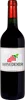
Winery Santa GiustinaGutturnio Frizzante
 Sparkling wine


This wine generally goes well with pork, poultry or mild and soft cheese.
Food and wine pairings with Gutturnio Frizzante
Pairings that work perfectly with Gutturnio Frizzante



Original food and wine pairings with Gutturnio Frizzante

The Gutturnio Frizzante of Winery Santa Giustina matches generally quite well with dishes of pork, spicy food or poultry such as recipes of rougail sausage, island grouper or cheeseburger.
Details and technical informations about Winery Santa Giustina's Gutturnio Frizzante.
Discover the grape variety: Verdesse
Verdesse is a white grape variety, grown on an area of about 5 ha. It is found particularly in the Grésivaudan and Drac valleys. It is also called verdêche, étraire blanche de Grenoble or verdasse. The leaves are lobed and dark green in colour. Long, sturdy stalks carry the bunches. A juicy and sweet flesh is found under the white skin, turning amber red, of the mature berries. The berries are medium-sized and ellipsoid in shape. To be productive and vigorous, the variety is pruned rather long. Verdesse is not very resistant to mildew and powdery mildew, but it is very resistant to grey rot. A particularly alcoholic wine is produced from this variety. It has a pleasant flavour and a vegetal and floral scent. This wine does not keep long, and is best consumed during the first few years.
Last vintages of this wine
The best vintages of Gutturnio Frizzante from Winery Santa Giustina are 0
Informations about the Winery Santa Giustina
The Winery Santa Giustina is one of of the world's great estates. It offers 15 wines for sale in the of Gutturnio to come and discover on site or to buy online.

The wine region of Gutturnio
The wine region of Gutturnio is located in the region of Colli Piacentini of Émilie-Romagne of Italy. Wineries and vineyards like the Domaine Castello di Luzzano or the Domaine Cantine Casabella produce mainly wines red, sparkling and white. The most planted grape varieties in the region of Gutturnio are Cabernet-Sauvignon, Sangiovese and Chardonnay, they are then used in wines in blends or as a single variety. On the nose of Gutturnio often reveals types of flavors of red fruit, black fruit or earth and sometimes also flavors of oak, non oak or dried fruit.
The wine region of Emilia-Romagna
Romagna/emilia">Emilia-Romagna is a Rich and fertile region in Northern Italy, and one of the country's most prolific wine-producing regions, with over 58,000 hectares (143,320 acres) of vines in 2010. It is 240 kilometers (150 miles) wide and stretches across almost the entire northern Italian peninsula, sandwiched between Tuscany to the South, Lombardy and Veneto to the north and the Adriatic Sea to the east. Nine miles of Liguria is all that separates Emilia-Romagna from the Ligurian Sea, and its uniqueness as the only Italian region with both an east and west coast. Emilia-Romagna's wine-growing heritage dates back to the seventh century BC, making it one of the oldest wine-growing regions in Italy.
The word of the wine: Grand Cru
In Burgundy, the fourth and final level of classification (above the regional, communal and premier cru appellations), designating the wines produced on delimited plots of land (the climats) whose name alone constitutes the appellation. The climats classified as Grand Cru are 32 in the Côte d'Or plus one in Chablis which is divided into 7 distinct climats. Representing barely 1.5% of the production, the Grand Crus are the aristocracy of Burgundy wines.