The Winery Saint-Dezery of Languedoc-Roussillon
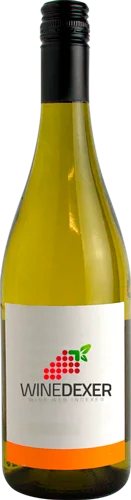
Winery Saint-Dezery
The winery offers 16 different wines
3.7


Note - 1Note - 1Note - 1Note - 0.5Note - 0
Its wines get an average rating of 3.7.
It is currently not ranked among the best domains of Languedoc-Roussillon.
It is located in Languedoc-Roussillon
Find the Winery Saint-Dezery on Facebook

The Winery Saint-Dezery is one of the best wineries to follow in Languedoc-Roussillon.. It offers 16 wines for sale in of Languedoc-Roussillon to come and discover on site or to buy online.
Top Winery Saint-Dezery wines

Looking for the best Winery Saint-Dezery wines in Languedoc-Roussillon among all the wines in the region? Check out our tops of the best red, white or effervescent Winery Saint-Dezery wines. Also find some food and wine pairings that may be suitable with the wines from this area. Learn more about the region and the Winery Saint-Dezery wines with technical and enological descriptions.

The top white wines of Winery Saint-Dezery

Food and wine pairings with a white wine of Winery Saint-Dezery

How Winery Saint-Dezery wines pair with each other generally quite well with dishes of pasta, vegetarian or poultry such as recipes of my lasagna bolognese (without béchamel sauce), zucchini quiche or savoury cake base and various fillings.

The grape varieties most used in the white wines of Winery Saint-Dezery.

  • Sauvignon Blanc

Discovering the wine region of Languedoc-Roussillon

Languedoc (formerly Coteaux du Languedoc) is a key appellation used in the Languedoc-Roussillon wine region of southern France. It covers Dry table wines of all three colors (red, white and rosé) from the entire region, but leaves Sweet and Sparkling wines to other more specialized appellations. About 75% of all Languedoc wines are red, with the remaining 25% split roughly down the middle between whites and rosés. The appellation covers most of the Languedoc region and almost a third of all the vineyards in France.

The typical Languedoc red wine is medium-bodied and Fruity. The best examples are slightly heavier and have darker, more savoury aromas, with notes of spice, undergrowth and leather. The Grape varieties used to make them are the classic southern French ones: Grenache, Syrah and Mourvèdre, often with a touch of Carignan or Cinsaut. The white wines of the appellation are made from Grenache Blanc, Clairette and Bourboulenc, with occasional use of Viognier, Marsanne and Roussanne from the Rhône Valley.

The top pink wines of Winery Saint-Dezery

Food and wine pairings with a pink wine of Winery Saint-Dezery

How Winery Saint-Dezery wines pair with each other generally quite well with dishes such as recipes .

Discover the grape variety: Sauvignon blanc

Originally from Bordeaux, Sauvignon, or Sauvignon Blanc, is reputed to be one of the best French grape varieties for white wine. It is a white grape variety, not to be confused with Sauvignon Gris and its pale yellow color, or with Cabernet Sauvignon which produces red wines. Particularly famous thanks to Sancerre, Sauvignon Blanc is cultivated as far as New Zealand, where it produces great wines whose reputation is well established.

Discover other wineries and winemakers neighboring the Winery Saint-Dezery

Planning a wine route in the of Languedoc-Roussillon? Here are the wineries to visit and the winemakers to meet during your trip in search of wines similar to Winery Saint-Dezery.

Discover the grape variety: Saint-Pierre doré

Belonging to the Estaing wines, the Saint Pierre doré is also called Roussellou. With an average budding, this variety is presented in the form of full, winged, elongated and very large bunches, with pulpy, spherical and medium-sized berries. When ripe, the fruit is golden-white in colour, with bronze leaves, which may be three-lobed or whole. The red colour is also found on the internodes of its herbaceous branch. For best results, a fairly long pruning will suit the Saint Pierre Doré, which is not overly afraid of oidium or mildew, but more afraid of grey rot. The characteristics of the roussellou mean that it could play a major role in the production of sparkling wines. The vine does indeed give a very acidic taste, not very sweet and with low degree aromas. It has been noted that the extent of the vineyard recorded in 1958 is 123 Ha, to be reduced to 1 Ha in 1994 on the French territory.
