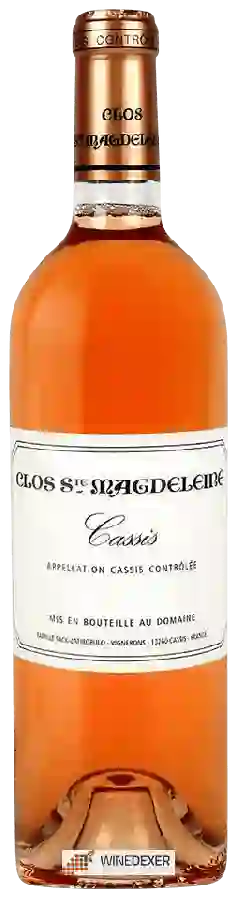
Clos Sainte MagdeleineCassis Rosé
 Pink wine


In the mouth this pink wine is a with a nice freshness.
This wine generally goes well with pork, vegetarian or poultry.
The Cassis Rosé of the Clos Sainte Magdeleine is in the top 10 of wines of Cassis.

Taste structure of the Cassis Rosé from the Clos Sainte Magdeleine
Light | Bold | |
Dry | Sweet | |
Soft | Acidic |
In the mouth the Cassis Rosé of Clos Sainte Magdeleine in the region of Provence is a with a nice freshness.
Wine flavors and olphactive analysis






On the nose the Cassis Rosé of Clos Sainte Magdeleine in the region of Provence often reveals types of flavors of grapefruit, citrus or peach and sometimes also flavors of butter, minerality or red fruit.
Food and wine pairings with Cassis Rosé
Pairings that work perfectly with Cassis Rosé



Original food and wine pairings with Cassis Rosé

The Cassis Rosé of Clos Sainte Magdeleine matches generally quite well with dishes of pork, shellfish or vegetarian such as recipes of beef bourguignon with cookéo, marco polo salad or leek, goat cheese and bacon quiche.
Discover the grape variety: Mourvèdre
Powerful, deep reds with firm tannins and dense texture, showing aromas of blackberry, leather, garrigue, black pepper, liquorice and animal notes (game, forest floor) with age. Star of Bandol AOC as a single variety and pillar of Châteauneuf-du-Pape, Gigondas and Costières blends. Also in GSM in Languedoc and Australia. A late-ripening variety of Spanish origin (Mataró/Monastrell).
Last vintages of this wine

The best vintages of Cassis Rosé from Clos Sainte Magdeleine are 2019, 2018, 2015, 2017 and 2016.
Informations about the Clos Sainte Magdeleine
The Clos Sainte Magdeleine is one of of the world's greatest estates. It offers 8 wines for sale in the of Cassis to come and discover on site or to buy online.

The wine region of Cassis
Provençal AOC (1936, among the first six classified) in an amphitheatre facing the Mediterranean below Cap Canaille, 196 ha on limestone soils, sunny and windy maritime climate. Signature whites (70%, rare in Provence) from Marsanne and Clairette: full-bodied and iodine-tinged with white peach, candied citrus, flowers, anise and saline-mineral coastal notes. Bourboulenc and Ugni Blanc as support. Lively rosés and supple reds from Grenache and Mourvèdre.
The wine region of Provence
World capital of dry, refined rosé (~90% of production). Pale rose-petal colour, delicate nose of fresh red fruits (strawberry, raspberry, redcurrant), citrus (pink grapefruit), white flowers and a mineral touch, taut and thirst-quenching palate — the Mediterranean aperitif par excellence. Blends of Grenache, Cinsault, Syrah, Tibouren and Mourvèdre. Fleshy Bandol reds from Mourvèdre (leather, garrigue, age-worthy), straight Cassis whites.
The word of the wine: Pruine
A thin, fluffy film that covers the surface of the grape. It makes the berry impermeable and contains the indigenous yeasts necessary for the fermentation of the must.


