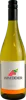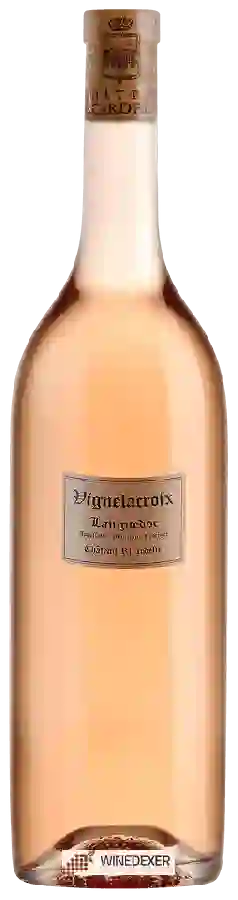
Château RicardelleVignelacroix Rosé
 Pink wine



In the mouth this pink wine is a with a nice freshness.
This wine generally goes well with vegetarian, appetizers and snacks or lean fish.

Taste structure of the Vignelacroix Rosé from the Château Ricardelle
Light | Bold | |
Dry | Sweet | |
Soft | Acidic |
In the mouth the Vignelacroix Rosé of Château Ricardelle in the region of Languedoc-Roussillon is a with a nice freshness.
Food and wine pairings with Vignelacroix Rosé
Pairings that work perfectly with Vignelacroix Rosé



Original food and wine pairings with Vignelacroix Rosé


The Vignelacroix Rosé of Château Ricardelle matches generally quite well with dishes of pasta, vegetarian or appetizers and snacks such as recipes of pasta carbonara almost like the real thing, zucchini quiche or emulsion of foie gras with pata negra.
Details and technical informations about Château Ricardelle's Vignelacroix Rosé.
Discover the grape variety: Dameron
Simple, rustic reds with a clear ruby colour, soft tannins and an airy palate, showing discreet aromas of red fruits and herbal notes. Formerly destined mainly for distillation into eau-de-vie. Now almost extinct, preserved in INRAE ampelographic collections, a witness to the former diversity of the Charentes vineyard before phylloxera. Old black variety from the Charentes, ancestor of the Cognac vineyard.
Last vintages of this wine
The best vintages of Vignelacroix Rosé from Château Ricardelle are 2016
Informations about the Château Ricardelle
The Château Ricardelle is one of of the world's great estates. It offers 25 wines for sale in the of Languedoc-Roussillon to come and discover on site or to buy online.

The wine region of Languedoc-Roussillon
Largest single French vineyard, dominated by sunny, generous reds. Spicy Syrah, candied Grenache (ripe fruit, garrigue), structured Carignan, deep Mourvèdre, supple Cinsault. Stars: structured Corbières, Minervois, Faugères, Saint-Chinian; round Côtes-du-Roussillon. Legendary vins doux naturels: Banyuls and Maury (fortified Grenache) with notes of cocoa, fig, prune.
The word of the wine: Ancestral method
A method of making certain sparkling wines such as blanquette de Limoux, sparkling gaillac or clairette de Die, which consists of a second fermentation in the bottle based on natural sugars and yeasts naturally brought by the grapes (unlike the méthode champenoise, which requires the addition of tirage liquor).