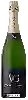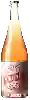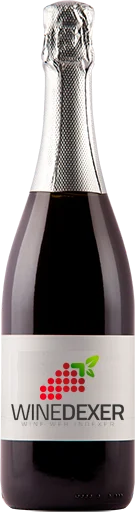
Winery ReymosBrut
 Sparkling wine


In the mouth this sparkling wine is a with a nice vivacity and a fine and pleasant bubble.
This wine generally goes well with appetizers and snacks, lean fish or shellfish.
Taste structure of the Brut from the Winery Reymos
Light | Bold | |
Soft | Acidic | |
Gentle | Fizzy |
In the mouth the Brut of Winery Reymos in the region of Valence is a with a nice vivacity and a fine and pleasant bubble.
Food and wine pairings with Brut
Pairings that work perfectly with Brut



Original food and wine pairings with Brut

The Brut of Winery Reymos matches generally quite well with dishes of shellfish, appetizers and snacks or lean fish such as recipes of flambéed prawns, roasted pumpkin seeds or fish with tamarind.
Details and technical informations about Winery Reymos's Brut.
Discover the grape variety: Siegerrebe
An intraspecific cross between the Madeleine angevine and the Gewurztraminer obtained in 1929 by Georg Scheu at the Alzey testing station (Germany). Almost unknown in France, it can be found in Germany, Denmark, the Netherlands, Belgium, Sweden, Switzerland, England, the United States, Canada, etc.
Last vintages of this wine

The best vintages of Brut from Winery Reymos are 2008, 0
Informations about the Winery Reymos
The Winery Reymos is one of of the world's great estates. It offers 25 wines for sale in the of Valence to come and discover on site or to buy online.

The wine region of Valence
Valencia is a province in the centre of Spain's sunny east coast, perhaps better known for its oranges (and paella) than its wine. The administrative Center of Valencia is the city of the same name, the third largest in Spain and the largest port on the Mediterranean. Archaeological evidence suggests that wine making in Valencia dates back more than a thousand years, but the region has never been particularly prominent on the world wine map. In modern times, Valencia's wine production has focused on quantity rather than quality, although this is gradually changing.
The word of the wine: Disgorging (champagne)
This is the evacuation of the deposit formed by the yeasts during the second fermentation in the bottle, by opening the bottle. The missing volume is completed with the liqueur de dosage - a mixture of wine and cane sugar - before the final cork is placed. For some years now, some producers have been replacing this sugar with rectified concentrated musts (concentrated grape juice) which give excellent results. A too recent dosage (less than three months) harms the gustatory harmony of the champagne.