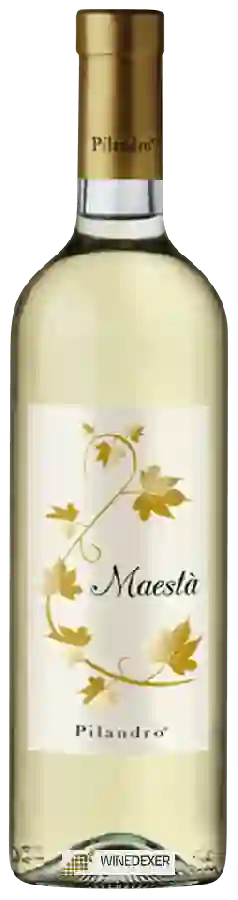
Winery PilandroMaestà
 White wine



In the mouth this white wine is a powerful with a nice freshness.
This wine generally goes well with lean fish, shellfish or mature and hard cheese.

Taste structure of the Maestà from the Winery Pilandro
Light | Bold | |
Dry | Sweet | |
Soft | Acidic |
In the mouth the Maestà of Winery Pilandro in the region of Veneto is a powerful with a nice freshness.
Food and wine pairings with Maestà
Pairings that work perfectly with Maestà



Original food and wine pairings with Maestà


The Maestà of Winery Pilandro matches generally quite well with dishes of pasta, shellfish or mature and hard cheese such as recipes of pasta with ham and tomato, wok of shrimps with vegetables or cancoillotte (made from metton).
Details and technical informations about Winery Pilandro's Maestà.
Discover the grape variety: Räuschling
Lively and elegant whites with fine tension, a pale golden colour, a light palate with preserved acidity and signature aromas of citrus (lemon), white flowers, white-fleshed fruits (green apple) and mineral notes. A rediscovered heritage variety. Grown mainly in the canton of Zurich (lake shores), it produces characterful artisan cuvées. Ancient Swiss white variety, nearly extinct, now preserved for its heritage value.
Last vintages of this wine
The best vintages of Maestà from Winery Pilandro are 2017, 0
Informations about the Winery Pilandro
The Winery Pilandro is one of of the world's great estates. It offers 29 wines for sale in the of Veneto to come and discover on site or to buy online.

The wine region of Veneto
World star of Prosecco: fresh, light Glera sparklers with notes of pear, green apple and white flowers, fruity, convivial bubbles. Veronese reds from Corvina and Rondinella: light, crisp Bardolino, fruity Valpolicella, opulent, concentrated Amarone DOCG (black cherry, chocolate, raisin) from dried grapes. Mineral, almondy Soave (Garganega) whites, fresh Pinot Grigio. 97,500 ha, Italy's largest production.
The word of the wine: Concentrate
Said of a wine that is rich in all its components (sugars in sweet wines, tannins in red wines, aromatic compounds) and that leaves an impression of density, intensity and depth.