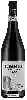
Winery Piero Riccardi Lorella RealeCollepazzo Cesanese Olevano Romano Riserva
 wine
wine
This wine generally goes well with
The Collepazzo Cesanese Olevano Romano Riserva of the Winery Piero Riccardi Lorella Reale is in the top 0 of wines of Cesanese di Olevano Romano.
Details and technical informations about Winery Piero Riccardi Lorella Reale's Collepazzo Cesanese Olevano Romano Riserva.
Discover the grape variety: Prosecco
It is said to be of Slovenian origin, where it is cultivated under the name of Prosekar, also known for a long time in Italy under the name of Glera. It should not be confused with prosecco lungo - although there is a family link - and prosecco nostrano, which is none other than Tuscany's malvasia. Note that Vitouska - another Italian grape variety - is the result of a natural intraspecific cross between Tuscan malvasia and Prosecco. Under the name of Glera, it is registered in the Official Catalogue of wine grape varieties list A. It can be found in practically all of the former Yugoslavia, and more surprisingly in Argentina, but is virtually unknown in France.
Informations about the Winery Piero Riccardi Lorella Reale
The Winery Piero Riccardi Lorella Reale is one of of the world's greatest estates. It offers 7 wines for sale in the of Cesanese di Olevano Romano to come and discover on site or to buy online.

The wine region of Cesanese di Olevano Romano
The wine region of Cesanese di Olevano Romano is located in the region of Latium of Italy. Wineries and vineyards like the Domaine Damiano Ciolli or the Domaine Migrante produce mainly wines red and white. On the nose of Cesanese di Olevano Romano often reveals types of flavors of non oak, earth or microbio and sometimes also flavors of vegetal, oak or tree fruit. In the mouth of Cesanese di Olevano Romano is a powerful with a nice freshness.
The wine region of Lazio
Lazio is a region in CentralItaly, where the ancient capital of Rome is located. The region's reputation is based primarily on its white wines, the main varieties of which are Trebbiano, Malvasia di Candia and Malvasia Puntinata. Traditionally, these wines were fat, Round, abboccato and intended for immediate consumption. Today, the styles are lighter, drier and crisper thanks to modern winemaking methods.
The word of the wine: Sapid
Said of a wine rich in flavours.