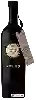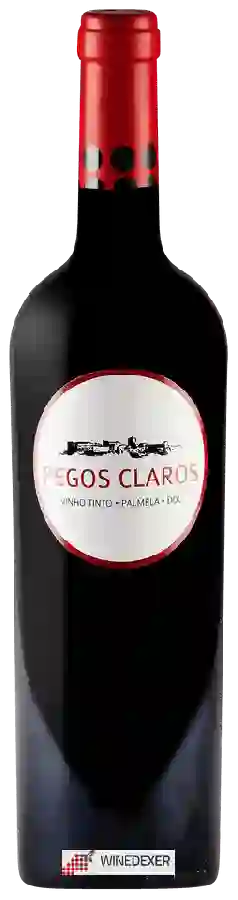
Winery Pegos ClarosTinto
 Red wine



In the mouth this red wine is a powerful.
This wine generally goes well with poultry, beef or veal.
The Tinto of the Winery Pegos Claros is in the top 10 of wines of Palmela.

Taste structure of the Tinto from the Winery Pegos Claros
Light | Bold | |
Smooth | Tannic | |
Dry | Sweet | |
Soft | Acidic |
In the mouth the Tinto of Winery Pegos Claros in the region of Península de Setúbal is a powerful.
Wine flavors and olphactive analysis



On the nose the Tinto of Winery Pegos Claros in the region of Península de Setúbal often reveals types of flavors of non oak, earth or oak and sometimes also flavors of red fruit, black fruit.
Food and wine pairings with Tinto
Pairings that work perfectly with Tinto



Original food and wine pairings with Tinto

The Tinto of Winery Pegos Claros matches generally quite well with dishes of beef, pasta or veal such as recipes of braised beef with carrots, tagliatelle with foie gras or saltimbocca alla romana.
Details and technical informations about Winery Pegos Claros's Tinto.
Discover the grape variety: Rondo
Colourful, fruity reds with a dense purple robe, supple tannins and fresh acidity. Aromas of black cherry, blackberry, plum, blackcurrant and spicy notes. Round palate, best drunk young. A very early-ripening, cold-hardy interspecific variety (to -25 °C), it drives northern viticulture in Germany, the UK, the Netherlands, Belgium, Denmark, Sweden and Poland. German hybrid created in 1964 at Geilweilerhof (Vitis amurensis × Saint-Laurent, descended from Zarya Severa).
Last vintages of this wine
The best vintages of Tinto from Winery Pegos Claros are 2014, 1994, 2004, 1996 and 2016.
Informations about the Winery Pegos Claros
The Winery Pegos Claros is one of of the world's greatest estates. It offers 9 wines for sale in the of Palmela to come and discover on site or to buy online.

The wine region of Palmela
DOC of the Setúbal peninsula south of Lisbon, sandy and limestone plains between mountains and Atlantic, warm maritime climate. Signature Castelão as red king (min. 67%, thrives better here than elsewhere in Portugal): fresh and fruity profile with notes of red cherry, raspberry, plum, Mediterranean herbs and a peppery touch, firm but round tannins — with age, complex notes of cedar and tobacco. Aragonez, Trincadeira, Cabernet and Syrah as complements.
The wine region of Península de Setúbal
Portuguese peninsula south of Lisbon between the Tagus and Sado estuaries. World-renowned speciality: Moscatel de Setúbal, a golden fortified sweet wine with signature notes of candied orange, dried apricot, honey, fig, currant and sweet spices, long ageing — the rare Roxo version has more floral notes. Also fruity, supple Castelão reds (64%) (blackberry, plum), perfumed Touriga Nacional. Oceanic climate.
The word of the wine: Farm
Wine dominated by a strong acidity and/or biting tannins. In this case, the components of the wine need to melt, i.e. to harmonize during the maturation in the cellar.