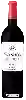
Winery OndarreLaztana Reserva
 Red wine



In the mouth this red wine is a powerful with a nice balance between acidity and tannins.
This wine generally goes well with poultry, beef or veal.

Taste structure of the Laztana Reserva from the Winery Ondarre
Light | Bold | |
Smooth | Tannic | |
Dry | Sweet | |
Soft | Acidic |
In the mouth the Laztana Reserva of Winery Ondarre in the region of Rioja is a powerful with a nice balance between acidity and tannins.
Wine flavors and olphactive analysis



On the nose the Laztana Reserva of Winery Ondarre in the region of Rioja often reveals types of flavors of oaky, oak.
Food and wine pairings with Laztana Reserva
Pairings that work perfectly with Laztana Reserva



Original food and wine pairings with Laztana Reserva

The Laztana Reserva of Winery Ondarre matches generally quite well with dishes of beef, lamb or veal such as recipes of beef luc lake, lamb tagine with olives and honey or tanjia.
Details and technical informations about Winery Ondarre's Laztana Reserva.
Discover the grape variety: Tempranillo
Elegant, structured reds with aromas of strawberry, cherry, plum, leather, blond tobacco and pronounced vanilla from long oak ageing. Ranges from Joven to Crianza, Reserva and Gran Reserva. Star of Rioja DOCa, Ribera del Duero DO and Toro DO, also shines in the Douro as Tinta Roriz/Aragonez. One of the world's most planted Spanish varieties.
Last vintages of this wine
The best vintages of Laztana Reserva from Winery Ondarre are 2010, 2015, 2014, 2016
Informations about the Winery Ondarre
The Winery Ondarre is one of of the world's greatest estates. It offers 39 wines for sale in the of Rioja to come and discover on site or to buy online.

The wine region of Rioja
Star of great Spanish reds: signature Tempranillo, elegant and complex, with notes of ripe cherry, plum, leather, vanilla and tobacco from American oak ageing. Classification by age: fruity Joven, balanced Crianza, ample Reserva, deep, silky Gran Reserva (5 years, 2 in barrel). Some fresh Viura whites and generous rosés. Spain's first DOCa (1991), 3 sub-zones (Alta, Alavesa, Oriental), 93.
The word of the wine: Tartar (deposit)
White, chalky deposits that occur as a result of precipitation inside bottles and are often considered by consumers as a defect. They are in fact tartaric salts formed by tartaric acid, potassium and calcium naturally present in the wine. This deposit does not alter the quality of the wine and can be eliminated by a simple decanting.