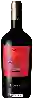
Winery MontecchioTrebbiano
 White wine


In the mouth this white wine is a powerful.
This wine generally goes well with lean fish, shellfish or mature and hard cheese.
Taste structure of the Trebbiano from the Winery Montecchio
Light | Bold | |
Dry | Sweet | |
Soft | Acidic |
In the mouth the Trebbiano of Winery Montecchio in the region of Veneto is a powerful.
Food and wine pairings with Trebbiano
Pairings that work perfectly with Trebbiano



Original food and wine pairings with Trebbiano


The Trebbiano of Winery Montecchio matches generally quite well with dishes of pasta, shellfish or mature and hard cheese such as recipes of very simple spaghetti carbonara, pasta with scampi or fusillis natalias.
Details and technical informations about Winery Montecchio's Trebbiano.
Discover the grape variety: Limnio
Certainly the oldest of the Greek grape varieties, it is given as having its first origins on the island of Lemnos or Limnos in the northern Aegean Sea, today much more cultivated in the northern part of Greece. It should not be confused with limniona, also of Greek origin, and to aggravate the confusion has as synonym limnio. Limnio can also be found in Romania, Italy, Germany, ... in France almost unknown.
Last vintages of this wine
The best vintages of Trebbiano from Winery Montecchio are 2017, 0
Informations about the Winery Montecchio
The Winery Montecchio is one of of the world's great estates. It offers 18 wines for sale in the of Veneto to come and discover on site or to buy online.

The wine region of Veneto
Veneto is an important and growing wine region in northeastern Italy. Veneto is administratively Part of the Triveneto area, aLong with its smaller neighbors, Trentino-Alto Adige and Friuli-Venezia Giulia. In terms of geography, culture and wine styles, it represents a transition from the Alpine and Germanic-Slavic end of Italy to the warmer, drier, more Roman lands to the South. Veneto is slightly smaller than the other major Italian wine regions - Piedmont, Tuscany, Lombardy, Puglia and Sicily - but it produces more wine than any of them.
The word of the wine: Table wine
A category of wine with no geographical indication on the label, often resulting from blends between wines from different vineyards in France or the EU. These wines are now called "wines without geographical indication" (and "French wines" if they come from the national territory).