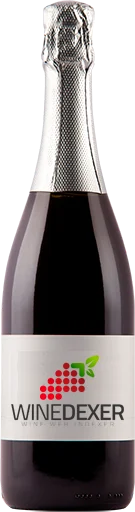
Winery MenestrelloLambrusco Bianco
 Sparkling wine



This wine generally goes well with pork, poultry or rich fish (salmon, tuna etc).
Food and wine pairings with Lambrusco Bianco
Pairings that work perfectly with Lambrusco Bianco



Original food and wine pairings with Lambrusco Bianco


The Lambrusco Bianco of Winery Menestrello matches generally quite well with dishes of pork, rich fish (salmon, tuna etc) or mature and hard cheese such as recipes of home-made white pudding, grilled bass with pastis and fennel or halibut with flambéed comté.
Details and technical informations about Winery Menestrello's Lambrusco Bianco.
Discover the grape variety: Troyen
An old grape variety from the Aube and Yonne departments, it was also found in the Meuse, Vosges and Moselle. It is the result of a natural intraspecific crossing between pinot noir and gouais blanc. Today, the Troyen is practically no longer multiplied.
Last vintages of this wine
The best vintages of Lambrusco Bianco from Winery Menestrello are 2017, 0
Informations about the Winery Menestrello
The Winery Menestrello is one of of the world's great estates. It offers 43 wines for sale in the of Emilia-Romagna to come and discover on site or to buy online.

The wine region of Emilia-Romagna
Romagna/emilia">Emilia-Romagna is a Rich and fertile region in Northern Italy, and one of the country's most prolific wine-producing regions, with over 58,000 hectares (143,320 acres) of vines in 2010. It is 240 kilometers (150 miles) wide and stretches across almost the entire northern Italian peninsula, sandwiched between Tuscany to the South, Lombardy and Veneto to the north and the Adriatic Sea to the east. Nine miles of Liguria is all that separates Emilia-Romagna from the Ligurian Sea, and its uniqueness as the only Italian region with both an east and west coast. Emilia-Romagna's wine-growing heritage dates back to the seventh century BC, making it one of the oldest wine-growing regions in Italy.
The word of the wine: Volatile acidity
Acidity resulting essentially from alcoholic fermentation and formed from acetic acids in the free state.