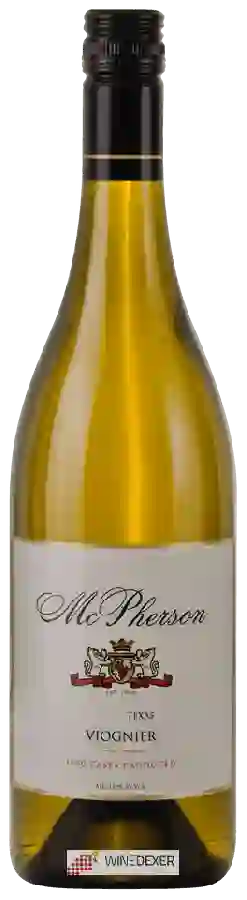
Winery McPherson CellarsViognier
 White wine



This wine generally goes well with pork, poultry or game (deer, venison).
The Viognier of the Winery McPherson Cellars is in the top 60 of wines of Texas.

Wine flavors and olphactive analysis






On the nose the Viognier of Winery McPherson Cellars in the region of Texas often reveals types of flavors of earth, microbio or vegetal and sometimes also flavors of oak, tree fruit or spices.
Food and wine pairings with Viognier
Pairings that work perfectly with Viognier



Original food and wine pairings with Viognier



The Viognier of Winery McPherson Cellars matches generally quite well with dishes of pork, game (deer, venison) or shellfish such as recipes of pork colombo, wild boar, roe deer or doe leg or cuttlefish rust from my grandmother in sète.
Details and technical informations about Winery McPherson Cellars's Viognier.
Discover the grape variety: Viognier
Opulent, heady whites, rich and silky, with intense aromas of apricot, yellow peach, mango, violet, honeysuckle and musky, honeyed notes. Discreet acidity, creamy finish. Star of Condrieu AOC and Château-Grillet AOC, co-vinified in Côte-Rôtie with Syrah (up to 20%). Widely exported to California (Central Coast), Australia (Eden Valley) and Languedoc. A Rhône variety.
Last vintages of this wine
The best vintages of Viognier from Winery McPherson Cellars are 2016, 2011, 2012, 2010 and 2017.
Informations about the Winery McPherson Cellars
The Winery McPherson Cellars is one of of the world's greatest estates. It offers 47 wines for sale in the of Texas to come and discover on site or to buy online.

The wine region of Texas
5th US producer with a Mediterranean style suited to the heat. Signature Tempranillo as red: fleshy and fruity with notes of ripe cherry, plum and sweet spices, round tannins. Also dense Tannat, spicy Mourvèdre, juicy Sangiovese, peppery Syrah. Suited aromatic whites: full Viognier (apricot, flowers), saline Vermentino, lively Albariño.
The word of the wine: Disgorging (champagne)
This is the evacuation of the deposit formed by the yeasts during the second fermentation in the bottle, by opening the bottle. The missing volume is completed with the liqueur de dosage - a mixture of wine and cane sugar - before the final cork is placed. For some years now, some producers have been replacing this sugar with rectified concentrated musts (concentrated grape juice) which give excellent results. A too recent dosage (less than three months) harms the gustatory harmony of the champagne.


