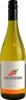
Winery Max SchellRiesling Halbtrocken
 White wine
In the mouth this white wine is a with a nice freshness.
This wine generally goes well with pork, poultry or shellfish.
Taste structure of the Riesling Halbtrocken from the Winery Max Schell
Light | Bold | |
Dry | Sweet | |
Soft | Acidic |
In the mouth the Riesling Halbtrocken of Winery Max Schell in the region of Ahr is a with a nice freshness.
Food and wine pairings with Riesling Halbtrocken
Pairings that work perfectly with Riesling Halbtrocken



Original food and wine pairings with Riesling Halbtrocken


The Riesling Halbtrocken of Winery Max Schell matches generally quite well with dishes of pork, shellfish or spicy food such as recipes of eggs in meurette, thai shrimp soup (tom yam goong) or keftas tajine with eggs.
Details and technical informations about Winery Max Schell's Riesling Halbtrocken.
Discover the grape variety: Riesling
White Riesling is a grape variety that originated in France (Alsace). It produces a variety of grape specially used for the elaboration of wine. It is rare to find this grape to eat on our tables. This variety of grape is characterized by small bunches, and small grapes. White Riesling can be found in many vineyards: Alsace, Loire Valley, Languedoc & Roussillon, Lorraine, Provence & Corsica, Rhone Valley, Savoie & Bugey, Beaujolais, South West.
Informations about the Winery Max Schell
The Winery Max Schell is one of of the world's great estates. It offers 37 wines for sale in the of Ahr to come and discover on site or to buy online.

The wine region of Ahr
Ahr is one of Germany’s least-known and Northernmost wine regions, known for its Pinot Noir reds. It Lies immediately north of the Mosel, and follows the Ahr River in the Final stages of its journey towards its confluence with the Rhein. One might expect a wine region this far north (50°N) to specialize in white wines – like almost every other cool-Climate wine region. After all, neighboring Mosel and Mittelrhein both clearly favor white wines (around 85 percent).
The word of the wine: Mouth
The mouth is the third stage of wine tasting after the eye and nose. In the mouth, the taster identifies the aromas through the retronasal route, the flavours and the texture. It is in the mouth that the overall balance of the wine is apprehended.