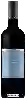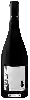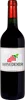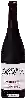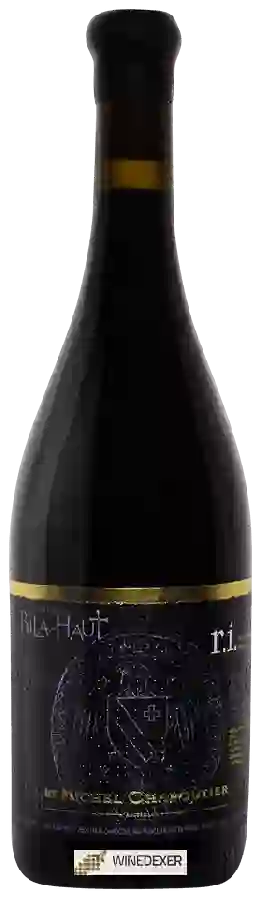
Winery M. ChapoutierDomaine de Bila-Haut R.I. (Rectificando Invenies) Côtes du Roussillon Villages
 Red wine



In the mouth this red wine is a powerful with a nice balance between acidity and tannins.
This wine generally goes well with beef, veal or pasta.
Taste structure of the Domaine de Bila-Haut R.I. (Rectificando Invenies) Côtes du Roussillon Villages from the Winery M. Chapoutier
Light | Bold | |
Smooth | Tannic | |
Dry | Sweet | |
Soft | Acidic |
In the mouth the Domaine de Bila-Haut R.I. (Rectificando Invenies) Côtes du Roussillon Villages of Winery M. Chapoutier in the region of Languedoc-Roussillon is a powerful with a nice balance between acidity and tannins.
Wine flavors and olphactive analysis




On the nose the Domaine de Bila-Haut R.I. (Rectificando Invenies) Côtes du Roussillon Villages of Winery M. Chapoutier in the region of Languedoc-Roussillon often reveals types of flavors of earth, oak or spices and sometimes also flavors of red fruit, black fruit.
Food and wine pairings with Domaine de Bila-Haut R.I. (Rectificando Invenies) Côtes du Roussillon Villages
Pairings that work perfectly with Domaine de Bila-Haut R.I. (Rectificando Invenies) Côtes du Roussillon Villages



Original food and wine pairings with Domaine de Bila-Haut R.I. (Rectificando Invenies) Côtes du Roussillon Villages
The Domaine de Bila-Haut R.I. (Rectificando Invenies) Côtes du Roussillon Villages of Winery M. Chapoutier matches generally quite well with dishes of beef, pasta or veal such as recipes of fondue with broth, pistou soup complete or pork shank stew.
Details and technical informations about Winery M. Chapoutier's Domaine de Bila-Haut R.I. (Rectificando Invenies) Côtes du Roussillon Villages.
Discover the grape variety: Iona
It is said to come from a seedling of diana - the latter is also a seedling of catawba - and propagated in 1860 by Dr. C.W. Grant, the introduction in the United States would date from 1863. Other ampelographers give it as coming directly from a seedling of catawba. The only certainty is that it is an interspecific cross with Vitis Labrusca as a parent. It should be noted that it is the parent of the diamond and the golden muscat. Iona can be found in the United States, Canada, New Zealand, etc. In France it is totally unknown. This variety can only be of interest to amateur gardeners, on the one hand to enlarge their collections and on the other hand, because it produces an excellent juice.
Last vintages of this wine
The best vintages of Domaine de Bila-Haut R.I. (Rectificando Invenies) Côtes du Roussillon Villages from Winery M. Chapoutier are 2015, 2010, 2011, 2014 and 2012.
Informations about the Winery M. Chapoutier
The Winery M. Chapoutier is one of of the world's great estates. It offers 225 wines for sale in the of Côtes du Roussillon Villages to come and discover on site or to buy online.

The wine region of Côtes du Roussillon Villages
The wine region of Côtes du Roussillon Villages is located in the region of Côtes du Roussillon of Languedoc-Roussillon of France. Wineries and vineyards like the Domaine du Clos des Fées or the Domaine de Rombeau produce mainly wines red, white and pink. The most planted grape varieties in the region of Côtes du Roussillon Villages are Mourvèdre, Lledoner pelut and Pinot noir, they are then used in wines in blends or as a single variety. On the nose of Côtes du Roussillon Villages often reveals types of flavors of cherry, anise or black plum and sometimes also flavors of citrus fruit, tree fruit or fennel.
The wine region of Languedoc-Roussillon
Languedoc (formerly Coteaux du Languedoc) is a key appellation used in the Languedoc-Roussillon wine region of southern France. It covers Dry table wines of all three colors (red, white and rosé) from the entire region, but leaves Sweet and Sparkling wines to other more specialized appellations. About 75% of all Languedoc wines are red, with the remaining 25% split roughly down the middle between whites and rosés. The appellation covers most of the Languedoc region and almost a third of all the vineyards in France.
The word of the wine: Pressing
Mechanical action consisting of pressing the grapes (before fermentation for whites) or the marc soaked in wine (after fermentation for reds).