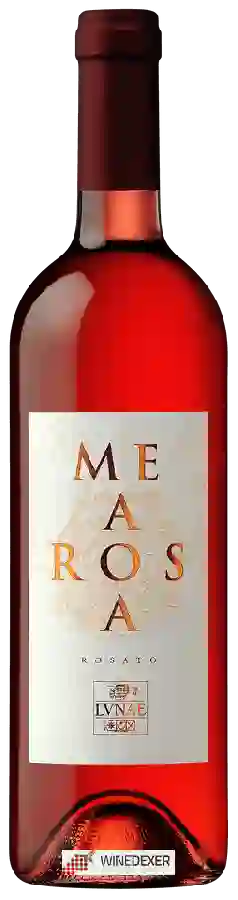
Winery LvnaeMea Rosa
 Pink wine



This wine generally goes well with
The Mea Rosa of the Winery Lvnae is in the top 70 of wines of Liguria.
Wine flavors and olphactive analysis




On the nose the Mea Rosa of Winery Lvnae in the region of Liguria often reveals types of flavors of non oak, earth or oak and sometimes also flavors of tree fruit, spices or citrus fruit.
Details and technical informations about Winery Lvnae's Mea Rosa.
Discover the grape variety: Ribolla gialla
A very old grape variety that has been cultivated for a long time in Italy, more precisely in the Friuli region. It can also be found in Slovenia, Greece (island of Cephalonia), in the United States (California), ... and it should not be confused with the robola or rombola aspri cultivated in Greece (Ionian islands).
Last vintages of this wine
The best vintages of Mea Rosa from Winery Lvnae are 2019, 2013, 2010, 2018 and 2017.
Informations about the Winery Lvnae
The Winery Lvnae is one of of the world's great estates. It offers 44 wines for sale in the of Liguria to come and discover on site or to buy online.

The wine region of Liguria
Liguria is a thin, crescent-shaped coastal region in northwestern Italy, stretching 250 km along the Mediterranean Sea from the border with southern France in the west to the port city of La Spezia in the east. Tuscany Lies beyond the latter, while the region's Central city, Genoa, is about 70 km southeast of Asti and Barolo (and even less so of Piedmont, parts of which run along the northern border of Liguria). Known as the Italian Riviera, this thin, beautiful strip of rugged land with a Mediterranean Climate and poor, stony soils is dominated by steeply sloping hills that fall almost directly into the sea. These steep elevations make Grape growing a challenge, resulting in scattered vineyards (some of which can only be reached by boat) with limited production.
The word of the wine: Perlant
Said of a slightly effervescent wine.