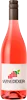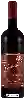
Winery Louis GuntrumBarrique-Reife Spätburgunder Auslese Trocken
 Red wine



In the mouth this red wine is a with a nice freshness.
This wine generally goes well with poultry, beef or veal.
The Barrique-Reife Spätburgunder Auslese Trocken of the Winery Louis Guntrum is in the top 80 of wines of Rheinhessen.
Taste structure of the Barrique-Reife Spätburgunder Auslese Trocken from the Winery Louis Guntrum
Light | Bold | |
Smooth | Tannic | |
Dry | Sweet | |
Soft | Acidic |
In the mouth the Barrique-Reife Spätburgunder Auslese Trocken of Winery Louis Guntrum in the region of Rheinhessen is a with a nice freshness.
Food and wine pairings with Barrique-Reife Spätburgunder Auslese Trocken
Pairings that work perfectly with Barrique-Reife Spätburgunder Auslese Trocken



Original food and wine pairings with Barrique-Reife Spätburgunder Auslese Trocken

The Barrique-Reife Spätburgunder Auslese Trocken of Winery Louis Guntrum matches generally quite well with dishes of beef, veal or game (deer, venison) such as recipes of beef stew, roast veal with caramelized carrots or potjevlesch (northern france).
Details and technical informations about Winery Louis Guntrum's Barrique-Reife Spätburgunder Auslese Trocken.
Discover the grape variety: Belair
Intraspecific crossing between the barlinka and the Alphonse Lavallée obtained in 1974 in South Africa by E.P. Evans and P.J.L. Ellis. In the same country and with the same parents, other varieties were created such as happiness, la rochelle, ... . Belair is registered since 2012 in the Official Catalogue of table grape varieties list A2.
Last vintages of this wine
The best vintages of Barrique-Reife Spätburgunder Auslese Trocken from Winery Louis Guntrum are 0
Informations about the Winery Louis Guntrum
The Winery Louis Guntrum is one of of the world's great estates. It offers 83 wines for sale in the of Rheinhessen to come and discover on site or to buy online.

The wine region of Rheinhessen
Rheinhessen is Germany's largest region for producing the quality wines of the Qualitätswein bestimmter Anbaugebiete (QbA) and Prädikatswein designations, with roughly 26,500 hectares (65,000 acres) of Vineyard">Vineyards as of 2014. Many of its most significant viticultural areas are favorably influenced by the Rhine river, which runs aLong its North and eastern borders. The Rhine, along with the Nahe river to the west and the Haardt mountains to its South, form a natural border. Rheinhessen covers an area south of Rheingau, north of Pfalz and east of Nahe, and is located within the Rhineland-Palatinate federal state.
The word of the wine: Muscat blanc à petits grains
A white grape variety cultivated since antiquity on the shores of the Mediterranean, it is considered the noblest of the muscats. It is mainly used to make sweet wines, often from mutage. In France, it is the sole variety used in many natural sweet wines: muscat-de-frontignan, muscat-de-mireval, muscat-de-lunel, muscat-de-saint-jean-de-minervois, muscat-de-beaumes-de-venise, muscat-du-cap-corse. Combined with Muscat d'Alexandrie, it gives Muscat-de-Rivesaltes. It is also used to make sparkling white wines (clairette-de-die; moscato d'asti and asti spumante in Italy) and dry wines (alsace-muscat). Powerfully aromatic and complex, its wines evoke fresh grapes, roses, exotic fruits, citrus fruits and spices.