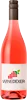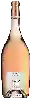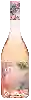
Winery Les Terres de Saint HilaireSaint Hilaire Rosé
 Pink wine
This wine generally goes well with pork, vegetarian or poultry.
Food and wine pairings with Saint Hilaire Rosé
Pairings that work perfectly with Saint Hilaire Rosé



Original food and wine pairings with Saint Hilaire Rosé

The Saint Hilaire Rosé of Winery Les Terres de Saint Hilaire matches generally quite well with dishes of pork, shellfish or vegetarian such as recipes of chicken drumstick with bacon, sauerkraut of the sea in casserole or light tuna-tomato quiche (without cream).
Details and technical informations about Winery Les Terres de Saint Hilaire's Saint Hilaire Rosé.
Discover the grape variety: Bertille Seyve 450
Interspecific crossing carried out by Bertille Seyve (1864-1944) between the 2003 Seibel and the Noah, which it closely resembles. It was mainly cultivated in the western departments of France, but also in the Rhône valley and the Ain.
Informations about the Winery Les Terres de Saint Hilaire
The Winery Les Terres de Saint Hilaire is one of of the world's great estates. It offers 17 wines for sale in the of Provence to come and discover on site or to buy online.

The wine region of Provence
Provence is a wine region in the far southeast of France, best known for the quality (and quantity) of its rosé wines and for its Warm, mild Climate. The modernization that is taking place in many of the traditional wine regions of southern France has not yet taken place to the same extent in Provence, but there are Clear signs of change. The region's Grape varieties, in particular, have come under scrutiny in recent decades. Traditional varieties such as Carignan, Barbaroux (Barbarossa from Sardinia) and Calitor are being replaced by more commercially viable varieties such as Grenache, Syrah and even Cabernet Sauvignon.
The word of the wine: Mouth
The mouth is the third stage of wine tasting after the eye and nose. In the mouth, the taster identifies the aromas through the retronasal route, the flavours and the texture. It is in the mouth that the overall balance of the wine is apprehended.