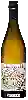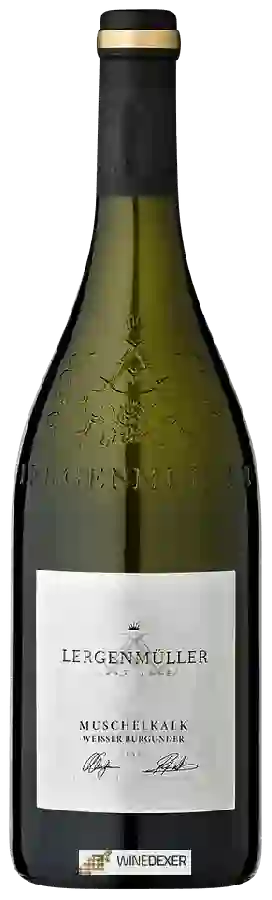
Winery LergenmüllerMuschelkalk Weisser Burgunder
 White wine


In the mouth this white wine is a powerful with a nice freshness.
This wine generally goes well with rich fish (salmon, tuna etc), shellfish or mild and soft cheese.

Taste structure of the Muschelkalk Weisser Burgunder from the Winery Lergenmüller
Light | Bold | |
Dry | Sweet | |
Soft | Acidic |
In the mouth the Muschelkalk Weisser Burgunder of Winery Lergenmüller in the region of Pfalz is a powerful with a nice freshness.
Wine flavors and olphactive analysis


On the nose the Muschelkalk Weisser Burgunder of Winery Lergenmüller in the region of Pfalz often reveals types of flavors of non oak, earth or oak and sometimes also flavors of tree fruit.
Food and wine pairings with Muschelkalk Weisser Burgunder
Pairings that work perfectly with Muschelkalk Weisser Burgunder



Original food and wine pairings with Muschelkalk Weisser Burgunder

The Muschelkalk Weisser Burgunder of Winery Lergenmüller matches generally quite well with dishes of rich fish (salmon, tuna etc), shellfish or mild and soft cheese such as recipes of light tuna-tomato quiche (without cream), fried rice with shrimp and chicken or tomato, pesto and mozzarella pizza.
Details and technical informations about Winery Lergenmüller's Muschelkalk Weisser Burgunder.
Discover the grape variety: Sweet Sapphire
Seedless (pip-free) table grape with long clusters and very elongated cylindrical blue-black berries with thin skin and crunchy flesh, sweet and fresh on the palate. Grown in California, China and Spain for export markets, prized for its striking elongated shape that catches the eye at premium counters. American black seedless table grape variety bred for fresh consumption.
Last vintages of this wine

The best vintages of Muschelkalk Weisser Burgunder from Winery Lergenmüller are 2016, 2018, 2014, 0 and 2015.
Informations about the Winery Lergenmüller
The Winery Lergenmüller is one of of the world's great estates. It offers 85 wines for sale in the of Pfalz to come and discover on site or to buy online.

The wine region of Pfalz
Fleshy, dry, fruity Riesling is the region's signature: yellow peach, apricot, ripe citrus, lovely mineral tension. Germany's largest red-wine area (40%), with silky Spätburgunder showing red fruit and spice, darker structured Dornfelder, supple Portugieser. Some rounded Pinot Blanc and Pinot Gris. A 23,640 ha vineyard along the Haardt, among Germany's warmest (>2,000 h of sun).
The word of the wine: Sweet
Generic term for wines containing residual sugar (natural sugars in the grapes that have not been transformed into alcohol). It is also used to describe a wine with a dominantly sweet flavour, without further explanation.