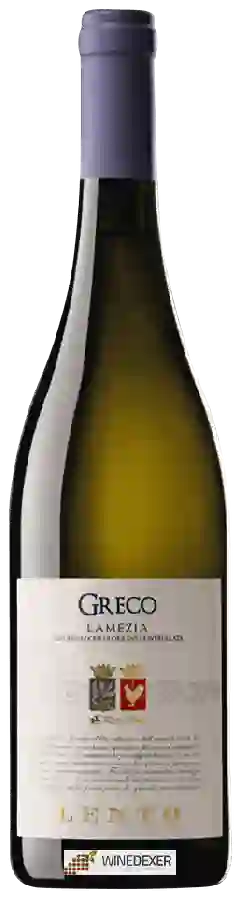
Winery LentoGreco
 White wine



In the mouth this white wine is a powerful.
This wine generally goes well with vegetarian, appetizers and snacks or shellfish.

Taste structure of the Greco from the Winery Lento
Light | Bold | |
Dry | Sweet | |
Soft | Acidic |
In the mouth the Greco of Winery Lento in the region of Calabria is a powerful.
Wine flavors and olphactive analysis



On the nose the Greco of Winery Lento in the region of Calabria often reveals types of flavors of earth, tree fruit or citrus fruit.
Food and wine pairings with Greco
Pairings that work perfectly with Greco



Original food and wine pairings with Greco
The Greco of Winery Lento matches generally quite well with dishes of shellfish, vegetarian or appetizers and snacks such as recipes of wok of pointed cabbage with shrimps and lemongrass bo bun style, summer tuna quiche or tomato tartar.
Details and technical informations about Winery Lento's Greco.
Discover the grape variety: Bayan shirei
Structured, full-bodied whites in dry styles, and sweet or fortified versions, with a pale golden to amber robe and an ample palate with moderate acidity. Signature aromas of ripe yellow fruits (peach, apricot), white flowers, honey and Caucasian mineral notes. Star of Azerbaijani and Caucasian whites, excelling both dry and in dessert wines. A native white grape of Azerbaijan, grown mainly in the Shamakhi region.
Last vintages of this wine
The best vintages of Greco from Winery Lento are 2018, 2017, 2016, 2014 and 2019.
Informations about the Winery Lento
The Winery Lento is one of of the world's greatest estates. It offers 29 wines for sale in the of Calabria to come and discover on site or to buy online.

The wine region of Calabria
Italy's far south between the Ionian and Tyrrhenian seas, a millennia-old tradition (Greek "Oenotria"). Emblematic Gaglioppo (the "black prince"): sun-drenched reds with signature notes of black cherry, candied plum, garrigue, tobacco, spice and balsamic notes, firm tannins — peaking at Ciro DOC on the Ionian coast. Also fleshy Magliocco, dense Nerello, Greco Bianco in a fresh, almondy white, ample Mantonico. Hot Mediterranean climate, volcanic and clay-sandy soils.
The word of the wine: Flexible
A tender wine with little tannin.