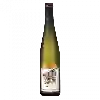
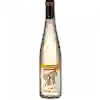
The Winery Leipp-Leininger of Alsace

Winery Leipp-Leininger
The winery offers 24 different wines
3.8


Note - 1Note - 1Note - 1Note - 0.5Note - 0
Its wines get an average rating of 3.8.
It is ranked in the top 2764 of the estates of Alsace.
It is located in Alsace

The Winery Leipp-Leininger is one of the best wineries to follow in Alsace.. It offers 24 wines for sale in of Alsace to come and discover on site or to buy online.
Top Winery Leipp-Leininger wines

Looking for the best Winery Leipp-Leininger wines in Alsace among all the wines in the region? Check out our tops of the best red, white or effervescent Winery Leipp-Leininger wines. Also find some food and wine pairings that may be suitable with the wines from this area. Learn more about the region and the Winery Leipp-Leininger wines with technical and enological descriptions.

The top sparkling wines of Winery Leipp-Leininger

Food and wine pairings with a sparkling wine of Winery Leipp-Leininger

How Winery Leipp-Leininger wines pair with each other generally quite well with dishes of shellfish, poultry or appetizers and snacks such as recipes of chinese noodles with shrimp, turkey blanquette with mushrooms or fake foie gras.

Organoleptic analysis of sparkling wines of Winery Leipp-Leininger

In the mouth the sparkling wine of Winery Leipp-Leininger. is a powerful with a nice vivacity and a fine and pleasant bubble.

The grape varieties most used in the sparkling wines of Winery Leipp-Leininger.

  • Chardonnay

Discovering the wine region of Alsace

Alsace, located in the extreme north-east of France, is Distinguished from other French wine regions by its strong Franco-Germanic influences. These influences are the result of a back-and-forth between the German and French sovereignties over the last few centuries. They can be seen not only in the architecture and culture of Alsace, but also in the wines. Alsace wines are produced under three main appellations: Alsace and Alsace Grand Cru for still white wines (Sweet and Dry), and Crémant d'Alsace for Sparkling wines.

Almost all the wines produced in this region fall under one of these three appellations. Alsace Grand Cru wines are produced from one of the 51 privileged vineyards spread along the Length of the region. Alsace is the only French wine region to produce significant quantities of Riesling and Gewurztraminer. These two grape varieties are more commonly associated with German wines and are reminiscent of Alsace's history.

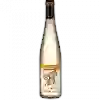
The top white wines of Winery Leipp-Leininger

Food and wine pairings with a white wine of Winery Leipp-Leininger

How Winery Leipp-Leininger wines pair with each other generally quite well with dishes of pork, rich fish (salmon, tuna etc) or spicy food such as recipes of cannelloni of meat, sophie's tuna cake or real paella recipe from valencia.

Organoleptic analysis of white wines of Winery Leipp-Leininger

On the nose the white wine of Winery Leipp-Leininger. often reveals types of flavors of microbio. In the mouth the white wine of Winery Leipp-Leininger. is a powerful with a nice freshness.

The best vintages in the white wines of Winery Leipp-Leininger

  • 2014With an average score of 4.18/5
  • 2015With an average score of 3.90/5
  • 2016With an average score of 3.66/5

The grape varieties most used in the white wines of Winery Leipp-Leininger.

  • Riesling
  • Gewürztraminer
  • Muscat Blanc
  • Pinot Gris
  • Klevner
  • Pinot Blanc

Discover the grape variety: Pinot blanc

Pinot Blanc is a grape variety that originated in Burgundy, mutated from Pinot Gris. Today, it is grown in Alsace where it is called klevner when blended with auxerrois. The continental climate, with its cold winters and hot summers, is particularly suited to pinot blanc. It is resistant to frost in winter and in summer, the roots draw the minerals it needs from the warm soil. Its bunches are made up of small berries with thick skins and melting pulp that produce fruity, spicy wines, balanced between acidity and alcohol. pinot blanc is also used for crémants and sparkling wines. Pinot Blanc is also used for Crémant and sparkling wines. It is widely grown in Italy, where it covers almost 7,000 hectares, and is also found in Germany, Austria, Canada and South Africa.

The top red wines of Winery Leipp-Leininger

Food and wine pairings with a red wine of Winery Leipp-Leininger

How Winery Leipp-Leininger wines pair with each other generally quite well with dishes of veal, game (deer, venison) or poultry such as recipes of venison bourguignon, canned duck confit or butter chicken or chicken makkhani (india).

The grape varieties most used in the red wines of Winery Leipp-Leininger.

  • Pinot Noir

The word of the wine: Short

Said of a wine that leaves little trace in the mouth after tasting (also called "short in the mouth").

The top pink wines of Winery Leipp-Leininger

Food and wine pairings with a pink wine of Winery Leipp-Leininger

How Winery Leipp-Leininger wines pair with each other generally quite well with dishes of veal, pork or game (deer, venison) such as recipes of veal fillet stroganoff, currywurst or duckling with bigarrade.

The grape varieties most used in the pink wines of Winery Leipp-Leininger.

  • Pinot Noir

Discover the grape variety: Chardonnay

The white Chardonnay is a grape variety that originated in France (Burgundy). It produces a variety of grape specially used for wine making. It is rare to find this grape to eat on our tables. This variety of grape is characterized by small bunches, and small grapes. White Chardonnay can be found in many vineyards: South West, Burgundy, Jura, Languedoc & Roussillon, Cognac, Bordeaux, Beaujolais, Savoie & Bugey, Loire Valley, Champagne, Rhone Valley, Armagnac, Lorraine, Alsace, Provence & Corsica.

Discover other wineries and winemakers neighboring the Winery Leipp-Leininger

Planning a wine route in the of Alsace? Here are the wineries to visit and the winemakers to meet during your trip in search of wines similar to Winery Leipp-Leininger.

Discover the grape variety: White muscat

White muscat is a white grape variety of Greek origin. Present in several Mediterranean vineyards, it has several synonyms such as muscat de Die, muscat blanc and frontignac. In France, it occupies a little less than 7,000 ha out of a total of 45,000 ha worldwide. Its young shoots are downy. Its youngest leaves are shiny, bronzed and scabrous. The berries and bunches of this variety are all medium-sized. The flesh of the berries is juicy, sweet and firm. Muscat à petits grains has a second ripening period and buds early in the year. It is moderately vigorous and must be pruned short. It likes poor, stony slopes. This variety is often exposed to spring frosts. It fears mildew, wasps, grape worms, court-noué, grey rot and powdery mildew. Muscat à petits grains is used to make rosé wines and dry white wines. Orange, brown sugar, barley sugar and raisins are the known aromas of these wines.

Discover other regions and appellation of Alsace