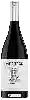
The Winery Leeuwenkuil Family Vineyards of Swartland of Western Cape
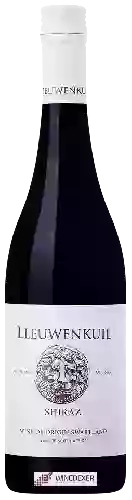
The Winery Leeuwenkuil Family Vineyards is one of the world's great estates. It offers 38 wines for sale in of Swartland to come and discover on site or to buy online.
Looking for the best Winery Leeuwenkuil Family Vineyards wines in Swartland among all the wines in the region? Check out our tops of the best red, white or effervescent Winery Leeuwenkuil Family Vineyards wines. Also find some food and wine pairings that may be suitable with the wines from this area. Learn more about the region and the Winery Leeuwenkuil Family Vineyards wines with technical and enological descriptions.
How Winery Leeuwenkuil Family Vineyards wines pair with each other generally quite well with dishes of beef, lamb or game (deer, venison) such as recipes of chicken, beef and lamb couscous (morocco), purple leg of lamb with red wine and cranberries or duck with vanilla (reunion island).
On the nose the red wine of Winery Leeuwenkuil Family Vineyards. often reveals types of flavors of cherry, oaky or smoke and sometimes also flavors of earthy, blackberry or red fruit. In the mouth the red wine of Winery Leeuwenkuil Family Vineyards. is a powerful with a nice balance between acidity and tannins.
The wine region of Swartland is located in the region of Coastal Region of Western Cape of South Africa. Wineries and vineyards like the Domaine Sadie Family or the Domaine Sadie Family produce mainly wines red, white and pink. The most planted grape varieties in the region of Swartland are Chenin blanc, Mourvèdre and Pinotage, they are then used in wines in blends or as a single variety. On the nose of Swartland often reveals types of flavors of cherry, marmalade or cantaloupe and sometimes also flavors of chard, poire nashi or red cherry.
In the mouth of Swartland is a powerful with a nice freshness. We currently count 192 estates and châteaux in the of Swartland, producing 832 different wines in conventional, organic and biodynamic agriculture. The wines of Swartland go well with generally quite well with dishes of pork, game (deer, venison) or rich fish (salmon, tuna etc).
How Winery Leeuwenkuil Family Vineyards wines pair with each other generally quite well with dishes of shellfish, spicy food or lean fish such as recipes of parillade of fish and seafood, navarin of lamb or saka-saka.
On the nose the white wine of Winery Leeuwenkuil Family Vineyards. often reveals types of flavors of earth, tree fruit or citrus fruit and sometimes also flavors of tropical fruit, microbio or vegetal. In the mouth the white wine of Winery Leeuwenkuil Family Vineyards. is a with a nice freshness.
Clairette rosé is a grape variety that originated in France (Provence). It produces a variety of grape used for wine making. However, it can also be found on our tables! Note that this grape variety can also be used for the elaboration of eaux de vie. This variety of vine is characterized by medium to large bunches of grapes of medium size. Clairette rosé can be found in several vineyards: South-West, Cognac, Bordeaux, Rhône Valley, Provence & Corsica, Languedoc & Roussillon, Loire Valley, Savoie & Bugey, Beaujolais, Armagnac.
How Winery Leeuwenkuil Family Vineyards wines pair with each other generally quite well with dishes of beef, lamb or spicy food such as recipes of savoyard matafans, pumpkin parmentier hash or korma chicken (india).
On the nose the pink wine of Winery Leeuwenkuil Family Vineyards. often reveals types of flavors of red fruit.
A technique that consists of leaving the grapes to macerate in the open air at a low temperature before fermentation, thus enhancing the aromatic expression of the wine.
Planning a wine route in the of Swartland? Here are the wineries to visit and the winemakers to meet during your trip in search of wines similar to Winery Leeuwenkuil Family Vineyards.
Colombard is one of the oldest grape varieties in the Charentes. This golden white grape variety is a cross between Chenin and Gouais. The young leaves of colombard are yellow with bronze patches. The adult leaves may be three-lobed or whole, depending on the variety. Its branches are cottony. The bunches of this variety are thick and cylindrical. Its elliptical berries are medium-sized. They change color until they ripen, ranging from greenish white to golden yellow. Colombard is associated with an average budding. It is particularly susceptible to leafhoppers, grape worms, mites, mildew, powdery mildew and gray mold. It is also sensitive to water stress, but is not very sensitive to wind. It ripens late in the second half of the year. There are a dozen approved clones of Colombard, the best known of which are 608, 607 and 606. This variety produces a full-bodied, fine white wine. Aromas of lime, nectarine, boxwood, citrus and exotic fruits are released.