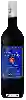
Le Grand ClosCarcassonne Cabernet Sauvignon
 Red wine
In the mouth this red wine is a powerful with a nice balance between acidity and tannins.
This wine generally goes well with beef, veal or pasta.
Taste structure of the Carcassonne Cabernet Sauvignon from the Le Grand Clos
Light | Bold | |
Smooth | Tannic | |
Dry | Sweet | |
Soft | Acidic |
In the mouth the Carcassonne Cabernet Sauvignon of Le Grand Clos in the region of Languedoc-Roussillon is a powerful with a nice balance between acidity and tannins.
Food and wine pairings with Carcassonne Cabernet Sauvignon
Pairings that work perfectly with Carcassonne Cabernet Sauvignon



Original food and wine pairings with Carcassonne Cabernet Sauvignon
The Carcassonne Cabernet Sauvignon of Le Grand Clos matches generally quite well with dishes of beef, pasta or veal such as recipes of pasta bolognese, pasta with parmesan cream and ham or pork tenderloin with chorizo and peppers.
Details and technical informations about Le Grand Clos's Carcassonne Cabernet Sauvignon.
Discover the grape variety: Cabernet-Sauvignon
Cabernet-Sauvignon noir is a grape variety that originated in France (Bordeaux). It produces a variety of grape specially used for wine making. It is rare to find this grape to eat on our tables. This variety of grape is characterized by small bunches, and small grapes. Cabernet-Sauvignon noir can be found in many vineyards: South-West, Loire Valley, Languedoc & Roussillon, Cognac, Bordeaux, Armagnac, Rhone Valley, Provence & Corsica, Savoie & Bugey, Beaujolais.
Informations about the Le Grand Clos
The Le Grand Clos is one of of the world's greatest estates. It offers 6 wines for sale in the of Languedoc-Roussillon to come and discover on site or to buy online.

The wine region of Languedoc-Roussillon
Languedoc (formerly Coteaux du Languedoc) is a key appellation used in the Languedoc-Roussillon wine region of southern France. It covers Dry table wines of all three colors (red, white and rosé) from the entire region, but leaves Sweet and Sparkling wines to other more specialized appellations. About 75% of all Languedoc wines are red, with the remaining 25% split roughly down the middle between whites and rosés. The appellation covers most of the Languedoc region and almost a third of all the vineyards in France.
The word of the wine: Film
Skin of the grape containing the colouring matter of red wines (anthocyanins), the most noble tannins and the essential aromatic substances.