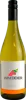
Le Grand ClosCarcassonne Sauvignon Blanc
 White wine


In the mouth this white wine is a .
This wine generally goes well with vegetarian, poultry or lean fish.
Taste structure of the Carcassonne Sauvignon Blanc from the Le Grand Clos
Light | Bold | |
Dry | Sweet | |
Soft | Acidic |
In the mouth the Carcassonne Sauvignon Blanc of Le Grand Clos in the region of Languedoc-Roussillon is a .
Food and wine pairings with Carcassonne Sauvignon Blanc
Pairings that work perfectly with Carcassonne Sauvignon Blanc



Original food and wine pairings with Carcassonne Sauvignon Blanc


The Carcassonne Sauvignon Blanc of Le Grand Clos matches generally quite well with dishes of pasta, vegetarian or poultry such as recipes of lasagna calabrese, spinach and goat cheese quiche or savoyard pizza (cream base).
Details and technical informations about Le Grand Clos's Carcassonne Sauvignon Blanc.
Discover the grape variety: Heroldrebe
Intraspecific crossing obtained in Germany in 1929 by August Karl Herold (1902-1973) between the blue Portuguese and the limberger. This variety can still be found in Germany, South Africa, etc. In France, it is practically unknown.
Informations about the Le Grand Clos
The Le Grand Clos is one of of the world's greatest estates. It offers 6 wines for sale in the of Languedoc to come and discover on site or to buy online.

The wine region of Languedoc
Languedoc (formerly Coteaux du Languedoc) is a key appellation used in the Languedoc-Roussillon wine region of southern France. It covers Dry table wines of all three colors (red, white and rosé) from the entire region, but leaves Sweet and Sparkling wines to other more specialized appellations. About 75% of all Languedoc wines are red, with the remaining 25% split roughly down the middle between whites and rosés. The appellation covers most of the Languedoc region and almost a third of all the vineyards in France.
The wine region of Languedoc-Roussillon
Languedoc (formerly Coteaux du Languedoc) is a key appellation used in the Languedoc-Roussillon wine region of southern France. It covers Dry table wines of all three colors (red, white and rosé) from the entire region, but leaves Sweet and Sparkling wines to other more specialized appellations. About 75% of all Languedoc wines are red, with the remaining 25% split roughly down the middle between whites and rosés. The appellation covers most of the Languedoc region and almost a third of all the vineyards in France.
The word of the wine: Power
Character of a wine that is full-bodied, generous and has a rich bouquet.