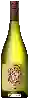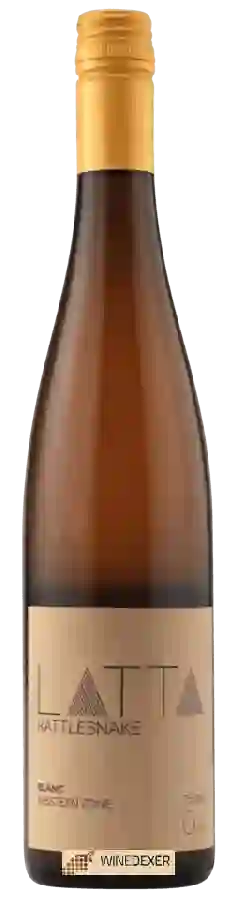
Winery LattaRattlesnake Blanc
 White wine


This wine is a blend of 3 varietals which are the Pinot gris, the Pinot noir and the Viognier.
This wine generally goes well with pork, vegetarian or poultry.
The Rattlesnake Blanc of the Winery Latta is in the top 10 of wines of Victoria.

Wine flavors and olphactive analysis




On the nose the Rattlesnake Blanc of Winery Latta in the region of Victoria often reveals types of flavors of earth, microbio or oak and sometimes also flavors of tree fruit, citrus fruit or tropical fruit.
Food and wine pairings with Rattlesnake Blanc
Pairings that work perfectly with Rattlesnake Blanc



Original food and wine pairings with Rattlesnake Blanc



The Rattlesnake Blanc of Winery Latta matches generally quite well with dishes of veal, pork or game (deer, venison) such as recipes of pork tenderloin with onions, endive frichti or duck pot au feu.
Details and technical informations about Winery Latta's Rattlesnake Blanc.
Discover the grape variety: Pinot gris
Rich, ample whites with a golden robe, showing aromas of pear, quince, honey, smoke, ginger and spice. Made as structured dry wines (Alsace AOC), off-dry and sumptuous late-harvest sweet (vendange tardive, sélection de grains nobles). Lighter and crisper in Italy as Pinot Grigio (Veneto, Friuli). Also in Germany (Grauburgunder), Hungary (Szürkebarát) and Oregon. A grey mutation of Pinot Noir.
Last vintages of this wine

The best vintages of Rattlesnake Blanc from Winery Latta are 2019, 2017, 0, 2020 and 2018.
Informations about the Winery Latta
The Winery Latta is one of of the world's greatest estates. It offers 46 wines for sale in the of Victoria to come and discover on site or to buy online.

The wine region of Victoria
Australian diversity from cool to temperate climate. Yarra Valley and Mornington: fine, silky Pinot Noir (cherry, raspberry, undergrowth), taut, mineral Chardonnay. Heathcote: structured Shiraz with black fruits, pepper and chocolate. Rutherglen, fortified capital: opulent sweet Topaque and Muscat (raisin, caramel, fig, roast notes).
The word of the wine: Chaptalization
The addition of sugar at the time of fermentation of the must, an ancient practice, but theorized by Jean-Antoine Chaptal at the dawn of the 19th century. The sugar is transformed into alcohol and allows the natural degree of the wine to be raised in a weak or cold year, or - more questionably - when the winegrower has a harvest that is too large to obtain good maturity.