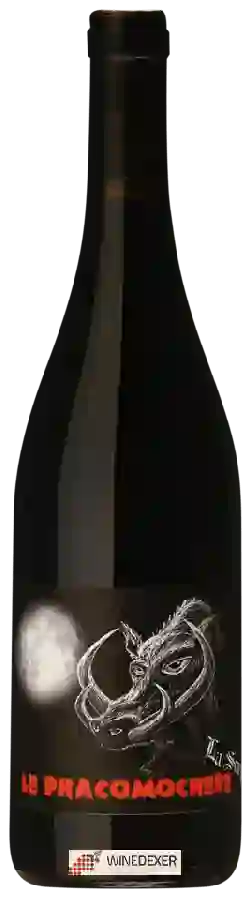
Winery La SorgaPhacomochere
 Red wine


In the mouth this red wine is a powerful with a nice balance between acidity and tannins.
This wine generally goes well with beef, veal or pasta.

Taste structure of the Phacomochere from the Winery La Sorga
Light | Bold | |
Smooth | Tannic | |
Dry | Sweet | |
Soft | Acidic |
In the mouth the Phacomochere of Winery La Sorga in the region of Languedoc-Roussillon is a powerful with a nice balance between acidity and tannins.
Wine flavors and olphactive analysis




On the nose the Phacomochere of Winery La Sorga in the region of Languedoc-Roussillon often reveals types of flavors of cherry, blackberry or pepper and sometimes also flavors of non oak, earth or oak.
Food and wine pairings with Phacomochere
Pairings that work perfectly with Phacomochere



Original food and wine pairings with Phacomochere
The Phacomochere of Winery La Sorga matches generally quite well with dishes of beef, pasta or veal such as recipes of beef bourguignon with tomato, pasta with artichoke hearts and bacon or roast veal with caramelized carrots.
Details and technical informations about Winery La Sorga's Phacomochere.
Discover the grape variety: Picolit noir
Light, fruity reds with a clear ruby colour, silky tannins and an airy palate, with aromas of red fruits (cherry, raspberry) and delicate floral notes. Discreet Friulian profile. Very rare, preserved for its heritage value, this dark-skinned mutation of the white Picolit survives in a few heritage plots in Friuli. An ancient north-east Italian variety.
Last vintages of this wine

The best vintages of Phacomochere from Winery La Sorga are 2014, 2015
Informations about the Winery La Sorga
The Winery La Sorga is one of of the world's great estates. It offers 88 wines for sale in the of Languedoc-Roussillon to come and discover on site or to buy online.

The wine region of Languedoc-Roussillon
Largest single French vineyard, dominated by sunny, generous reds. Spicy Syrah, candied Grenache (ripe fruit, garrigue), structured Carignan, deep Mourvèdre, supple Cinsault. Stars: structured Corbières, Minervois, Faugères, Saint-Chinian; round Côtes-du-Roussillon. Legendary vins doux naturels: Banyuls and Maury (fortified Grenache) with notes of cocoa, fig, prune.
The word of the wine: Seeds
A maximum of four, located in the heart of the grape berry, they contain tannins and nitrogenous matter.


