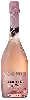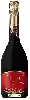
Winery La GirondaiseCrémant Brut Rosé
 Sparkling wine
This wine generally goes well with poultry, appetizers and snacks or lean fish.

Food and wine pairings with Crémant Brut Rosé
Pairings that work perfectly with Crémant Brut Rosé



Original food and wine pairings with Crémant Brut Rosé


The Crémant Brut Rosé of Winery La Girondaise matches generally quite well with dishes of shellfish, poultry or appetizers and snacks such as recipes of paella from an old spanish grandmother..., pastilla with chicken (moroccan pie with brick sheets) or hummus.
Details and technical informations about Winery La Girondaise's Crémant Brut Rosé.
Discover the grape variety: Foglia tonda
Structured, elegant reds with a deep ruby hue, firm tannins and a dense palate, with aromas of red fruits (cherry, raspberry), black fruits (blackberry, plum), soft spices and floral notes. Balanced, remarkably fine. Nearly extinct, rediscovered and grown by a handful of Tuscan artisan winemakers for identity wines. Native Italian Tuscan variety whose name evokes the rounded shape of its leaves.
Informations about the Winery La Girondaise
The Winery La Girondaise is one of wineries to follow in Crémant de Bordeaux.. It offers 24 wines for sale in the of Crémant de Bordeaux to come and discover on site or to buy online.

The wine region of Crémant de Bordeaux
Bordeaux AOC (1990) in traditional method, aged in underground quarries of Garonne and Dordogne. Fine sparkling whites with signature notes of white apple, pear, citrus, white flowers, brioche and an almond touch, fine bubbles and taut palate — Sémillon brings roundness, Sauvignon vivacity, Muscadelle aromatics. Cabernet Franc and Merlot rosés fruity. Affordable alternative to Champagne, festive wine with excellent value for money.
The wine region of Bordeaux
World-renowned age-worthy reds, led by round Merlot (plum, black fruit) or firm Cabernet Sauvignon (blackcurrant, cedar, graphite), blended with Cabernet Franc and Petit Verdot for tannic structure. Structured Médoc and Graves, velvety Saint-Émilion and Pomerol. Also crisp dry whites (Sauvignon/Sémillon) and opulent sweet Sauternes with honey and candied fruit. A 110,000 ha Gironde vineyard, 65 appellations, cradle of the 1855 classified growths.
The word of the wine: Leaflet
Small barrel with a capacity of 112 to 136 litres depending on the region.