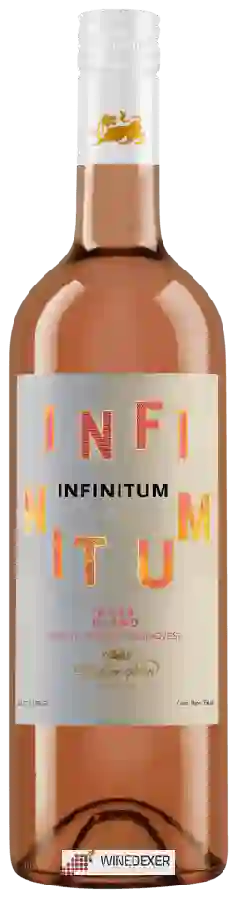
Winery La ConcepciónInfinitum Rosé Blend
 Pink wine


This wine is a blend of 2 varietals which are the Sangiovese and the Merlot.
This wine generally goes well with pork, poultry or beef.
The Infinitum Rosé Blend of the Winery La Concepción is in the top 90 of wines of Bolivia and in the top 80 of wines of Tarija.

Food and wine pairings with Infinitum Rosé Blend
Pairings that work perfectly with Infinitum Rosé Blend



Original food and wine pairings with Infinitum Rosé Blend



The Infinitum Rosé Blend of Winery La Concepción matches generally quite well with dishes of beef, lamb or veal such as recipes of roast beef casserole, leg of lamb with crust or duck with orange.
Details and technical informations about Winery La Concepción's Infinitum Rosé Blend.
Discover the grape variety: Sangiovese
Firm, upright reds with precise acidity and angular tannins, showing aromas of sour cherry, plum, dried herbs, leather, black tea and balsamic notes. Characteristically bitter, savoury finish. Star of Chianti Classico DOCG, Brunello di Montalcino DOCG, Vino Nobile di Montepulciano DOCG and Morellino di Scansano. Italy's most planted variety, a descendant of Ciliegiolo × Calabrese di Montenuovo.
Last vintages of this wine

The best vintages of Infinitum Rosé Blend from Winery La Concepción are 0, 2019
Informations about the Winery La Concepción
The Winery La Concepción is one of of the world's greatest estates. It offers 21 wines for sale in the of Tarija to come and discover on site or to buy online.

The wine region of Tarija
Wine capital of Bolivia, ~80% of national vineyard, vines planted between 1,600 and 2,350 m altitude (among the highest in the world). Very sunny dry climate, strong day-night temperature range. Muscat of Alexandria is the signature white king (~70%): aromatic and floral with fresh grape, citrus, white flowers, peach and honey — base of Singani, national spirit comparable to Pisco. Dense Malbec (blackberry, plum, violet, spices), firm Tannat and Cabernet in modern reds.
The word of the wine: Powdery mildew
Disease of the vine due to a fungus. Less dreadful than mildew, it only attacks the surface of the green parts. Sulphur has long been the best remedy.