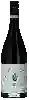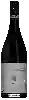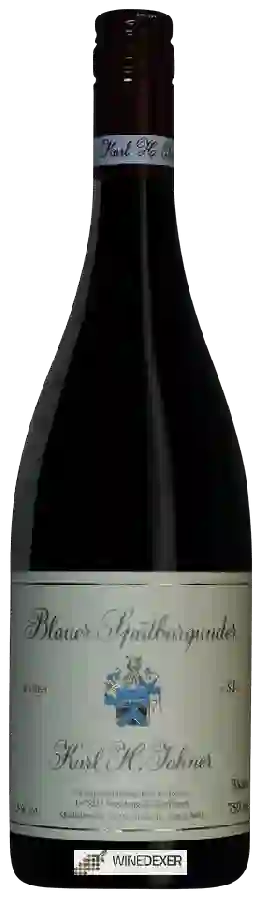
Winery Karl H. JohnerBlauer Spätburgunder
 Red wine


In the mouth this red wine is a with a nice freshness.
This wine generally goes well with poultry, beef or veal.
The Blauer Spätburgunder of the Winery Karl H. Johner is in the top 40 of wines of Baden.

Taste structure of the Blauer Spätburgunder from the Winery Karl H. Johner
Light | Bold | |
Smooth | Tannic | |
Dry | Sweet | |
Soft | Acidic |
In the mouth the Blauer Spätburgunder of Winery Karl H. Johner in the region of Baden is a with a nice freshness.
Wine flavors and olphactive analysis




On the nose the Blauer Spätburgunder of Winery Karl H. Johner in the region of Baden often reveals types of flavors of non oak, earth or microbio and sometimes also flavors of oak, spices or red fruit.
Food and wine pairings with Blauer Spätburgunder
Pairings that work perfectly with Blauer Spätburgunder



Original food and wine pairings with Blauer Spätburgunder

The Blauer Spätburgunder of Winery Karl H. Johner matches generally quite well with dishes of beef, veal or game (deer, venison) such as recipes of cataplana with seafood, atriaux en sauce or autumn pumpkin pie.
Details and technical informations about Winery Karl H. Johner's Blauer Spätburgunder.
Discover the grape variety: Airen
Simple, refreshing whites with a pale robe and a tender mouth, featuring discreet aromas of apple, citrus, fresh herbs and neutral notes. Moderate acidity, best drunk young. Very productive and drought-resistant, it produces easy-drinking whites in La Mancha DO and Valdepeñas DO on the Castilian plateau, and has historically supplied the base for Brandy de Jerez distillation. Native Spanish grape, long the world's most planted by surface area.
Last vintages of this wine

The best vintages of Blauer Spätburgunder from Winery Karl H. Johner are 2015, 2012, 2002, 2017 and 2013.
Informations about the Winery Karl H. Johner
The Winery Karl H. Johner is one of of the world's greatest estates. It offers 29 wines for sale in the of Baden to come and discover on site or to buy online.

The wine region of Baden
German capital of Pinot Noir (Spätburgunder): silky, fine reds with notes of red fruits, cherry, undergrowth and sweet spices, melted tannins. Round Grauburgunder (Pinot Gris), lively Weissburgunder, supple Müller-Thurgau, mineral Riesling. Germany's 3rd region (15,000 ha) in Baden-Württemberg facing Alsace, one of the country's warmest climates, volcanic soils at the Kaiserstuhl. Cradle of modern great German reds, elegant and fine.
The word of the wine: Chaptalization
The addition of sugar at the time of fermentation of the must, an ancient practice, but theorized by Jean-Antoine Chaptal at the dawn of the 19th century. The sugar is transformed into alcohol and allows the natural degree of the wine to be raised in a weak or cold year, or - more questionably - when the winegrower has a harvest that is too large to obtain good maturity.