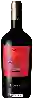
Winery I PrandiBianco
 White wine
In the mouth this white wine is a powerful.
This wine generally goes well with lean fish, shellfish or mature and hard cheese.

Taste structure of the Bianco from the Winery I Prandi
Light | Bold | |
Dry | Sweet | |
Soft | Acidic |
In the mouth the Bianco of Winery I Prandi in the region of Veneto is a powerful.
Food and wine pairings with Bianco
Pairings that work perfectly with Bianco



Original food and wine pairings with Bianco


The Bianco of Winery I Prandi matches generally quite well with dishes of pasta, shellfish or mature and hard cheese such as recipes of pasta with parmesan cream and ham, real swiss fondue or pasta gratin with comté cheese.
Details and technical informations about Winery I Prandi's Bianco.
Discover the grape variety: Mondeuse noire
Structured and elegant reds with a deep ruby colour, firm tannins and fresh alpine acidity, on aromas of black fruits (blackcurrant, blackberry), violet, pepper, spices and characteristic menthol notes. Fine ageing potential on marl-limestone terroirs. Star of the great crus of Vin de Savoie AOC (Arbin, Saint-Jean-de-la-Porte, Chignin), producing the identity alpine reds. Savoyard native variety, sometimes linked to Refosco dal Peduncolo Rosso from Friuli.
Informations about the Winery I Prandi
The Winery I Prandi is one of of the world's greatest estates. It offers 11 wines for sale in the of Veneto to come and discover on site or to buy online.

The wine region of Veneto
World star of Prosecco: fresh, light Glera sparklers with notes of pear, green apple and white flowers, fruity, convivial bubbles. Veronese reds from Corvina and Rondinella: light, crisp Bardolino, fruity Valpolicella, opulent, concentrated Amarone DOCG (black cherry, chocolate, raisin) from dried grapes. Mineral, almondy Soave (Garganega) whites, fresh Pinot Grigio. 97,500 ha, Italy's largest production.
The word of the wine: Sparkling
Equivalent to effervescent, this term is used among others to designate the "natural sparkling wines" produced in the Montlouis appellation.