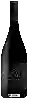
Winery Herdade dos GrousRuda Stecchino Single Oak
 Red wine
In the mouth this red wine is a powerful.
This wine generally goes well with poultry, beef or veal.
Taste structure of the Ruda Stecchino Single Oak from the Winery Herdade dos Grous
Light | Bold | |
Smooth | Tannic | |
Dry | Sweet | |
Soft | Acidic |
In the mouth the Ruda Stecchino Single Oak of Winery Herdade dos Grous in the region of Alentejano is a powerful.
Food and wine pairings with Ruda Stecchino Single Oak
Pairings that work perfectly with Ruda Stecchino Single Oak



Original food and wine pairings with Ruda Stecchino Single Oak

The Ruda Stecchino Single Oak of Winery Herdade dos Grous matches generally quite well with dishes of beef, lamb or veal such as recipes of boles de picolat (catalan meatballs), baked lamb neck on a bed of vegetables and grapes or roast veal orloff with mushrooms.
Details and technical informations about Winery Herdade dos Grous's Ruda Stecchino Single Oak.
Discover the grape variety: Ciliegiolo
It is believed to be of Spanish origin. Today it is very present in Tuscany and in many other Italian regions where it is often blended with sangiovese to produce the famous Chianti. According to recent genetic analysis, it is the father of the said sangiovese, its mother being an almost unknown variety called calabrese di Montenuovo. - Synonymy: ciliegino, ciregiuolo or cireguoli, aleatico di spagna (for all the synonyms of the grape varieties, click here!). - Description: medium to large bunches, cylindrical-conical, winged, compact, strong medium-sized stalks with very little lignification; medium-sized, round berries, skin of medium thickness, very bluish-black with sometimes purplish reflections, juicy pulp. - Production potential: buds early in the year, only a few days after Chasselas. It is particularly fond of not too poor hillside soils. Vigorous, productive and regular, it should however be pruned in relation to the fact that its base eyes are not very fertile. Sensitive to wind, mildew, powdery mildew, acid rot and grey rot. Resistant to drought. Ripening 2nd period late. - Wine type/flavours: gives a full and supple wine with soft tannins, rich in alcohol, of a more or less dark ruby colour with in some cases purplish tints. Aromas of cinnamon, cherry, blueberry, spicy notes, plum, fresh grapes, liquorice, tobacco, vanilla, ... .
Informations about the Winery Herdade dos Grous
The Winery Herdade dos Grous is one of of the world's great estates. It offers 46 wines for sale in the of Alentejano to come and discover on site or to buy online.

The wine region of Alentejano
Tejo">Alentejo is a well-known, highly respected wine region in eastern Portugal. This hot, Dry area covers approximately a third of the country and is best known for its red wine, the best of which are sold under the and Alentejo DOC (Denominacao de Origem Controlada) title. Wine from Alentejo is typically made from Aragonez (Tempranillo), Castelao, Trincadeira or a Rich, ripe, jammy blend of the three. Antao Vaz is the white variety of choice here, producing a good level of Acidity and tropical fruit flavors.
The word of the wine: Baco 22A
A white grape variety resulting from the hybridization of the folle blanche and the noah. It is the only hybrid to remain authorized in a French appellation vineyard, that of Armagnac, where it thrives in particular on the tawny sands of Bas-Armagnac. When distilled, its wine produces round, smooth and aromatic eaux-de-vie with hints of ripe fruit.